Brig. Gen. John Rafferty, director of Long Range Precision Fires (LRPF) Cross Functional Team calls rate of fire the “key” to overmatching adversaries.
During the week leading up to Project Convergence 21 (PC 21), a team of dedicated individuals made up of Yuma Proving Ground (YPG) and U.S. Army Combat Capabilities Development Command (DEVCOM) Armaments Center employees proved the Extended Range Cannon Artillery (ERCA) ammunition handling system (AHS), better known as the autoloader, is the key to unlocking a high rate of fire.
The demonstrations during PC 21, the Army’s campaign of learning, experimentation and demonstration held at YPG, ended the science and technology (ST) phase for the autoloader.
Concept and design
Josiah Fay, Armaments Center ERCA project officer for ST, has been working on the project nearly six years, starting during the initial concept phase.
“I thought it was great. We had not had the opportunity to develop an artillery system in a very long time,” said Fay.
While the autoloader was specifically under test during PC 21, Armaments Center autoloader lead Jim Lee explains, the work of each component in sync is what allows the AHS to do its job.
“ERCA is a very comprehensive armament system. Rate-of-fire is not just the autoloader, it’s the gun, it’s the projectile, it’s the cab, it’s the pointing, it’s the fire control, and part of it is the autoloader. So, our group is in charge of handling the projectile and the propellant. Loading it into the gun very quickly. Loading the projectile, loading the propellant and then let the gun fire, then we repeat. That’s how we get the rate of fire. We try to do as many things as possible in parallel.”
Earlier this year, the team tested the first fully integrated AHS. Since that test in March of 2021, the team quickly implemented lessons learned, Soldier informed feedback, and design for suitability with the development of a second ammunition handling system that was demonstrated during Project Convergence. The AHS sits inside a self-propelled howitzer with a PIM chassis.
“It allows us to place that mechanized handling, that automation, inside to be able to get after the rate of fire. Reducing the burden on the Soldiers, allowing them to be able to do other things by means of automation. We still maintain a full crew with this, but we give them the option as well,” explained Richard Granitzki, Armaments Center LRPF ST advisor to Rafferty.
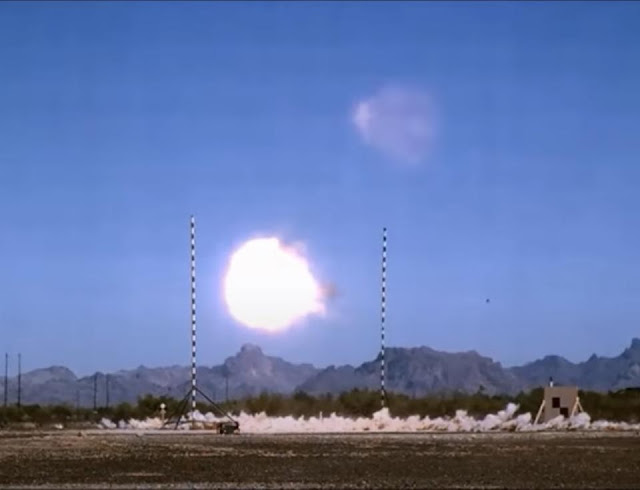
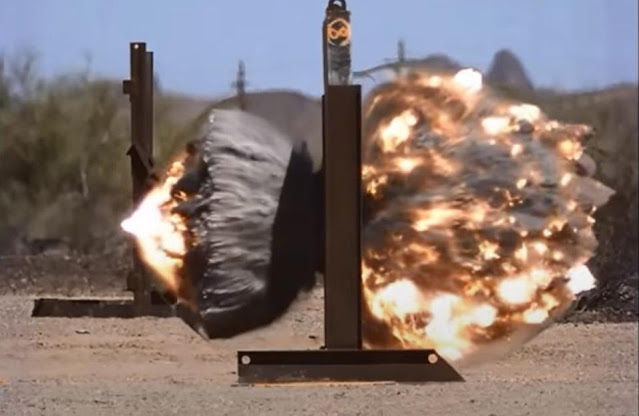
For testing purposes, the test crew executed the firing mission remotely for test range reasons, however, the manner in which the firing mission was executed showcased how a firing mission can be fully automated. “We are also showing what automated lethality would look like by conducting a multi-round burst coming from the autoloader system,” adds Granitzki.
The AHS is also versatile in the type of projectiles it can handle.
ERCA Autoloader controls lead Davie Gatter explains, “We first proved a five round burst with a single type projectile and super charges previously, whereas now we can handle MACS charges, supercharges, XM 660 stub charges, as well as the entire ERCA suite of projectiles, and fuzing those projectiles.”

The team
The final ST demonstration was the culmination of years’ worth of work. Many iterations and models led to what is now a working weapon system that was once dubbed the “renaissance of artillery.”
YPG’s test officers and gunners, many of whom formerly served in uniform, are one of the first to get their hands on the weapon system. Their feedback has helped with the design. One example, shares Granitzki, is the ammunition handling.
“Earlier iterations on how we did the resupply were much more crude. So being able to get that feedback has been able to help there. Including moving the charges inside the cab. It’s been invaluable.”
“We have a different perspective, because we have to use the system more than they do and they sometimes get lost in the programing and the hardware. We bring the user interface to it that I think helps them make it more usable for the Soldier down the road,” notes YPG Test Officer Casey Scharenbroich.
It’s no doubt the YPG team and the Armaments Center team have built a bond over this armament of the future.
“The commitment from YPG has been humbling. There is truly that comradery,” remarks Fay. “There is a belief here in the weapon system. They have seen us evolve this and there has been a trust built and that is really important.”
Future of ERCA Autoloader
“Our approach to the ERCA System has always been to start by increasing the range and lethality and then get to improving the rate of fire,” explained Rafferty.
In 2023 the first battalion set of ERCA with range and lethality will be rolled out. The rate of fire will eventually be integrated into the system.
Rafferty remarks, “The autoloader is one incredible option to put in the hands of our Soldiers.”
Ultimately, it is up to senior Army leaders to make the decision if the autoloader is the best option.
The demonstration and data collected provides leaders, “with the facts on the ground data that they can use to make an informed decision,” remarked Fay.
Via army.mil