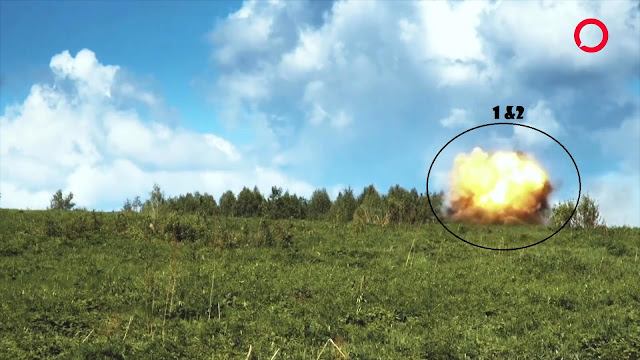
According to John Kirby, the drones have gotten to Ukraine. The US has already shipped the significant number of the first 100 AeroVironment Switchblade loitering munitions to Ukraine, Pentagon spokesman John Kirby said during a briefing Tuesday.
As we know US specialists trained a small group of Ukrainian soldiers who arrived to the US back in autumn in using these drones, they have returned home and train other Ukrainian soldiers.
WASHINGTON, February 17, 2022 - The State Department has made a determination approving a possible Foreign Military Sale to the Government of Poland of M1A2 SEPv3 Main Battle Tanks and related equipment for an estimated cost of $6.0 billion. The Defense Security Cooperation Agency delivered the required certification notifying Congress of this possible sale today.
The Government of Poland has requested to buy two hundred fifty (250) M1A2SEPv3 Abrams Main Battle tanks; two hundred fifty (250) AN/VLQ-12 CREW Duke counter-IED systems; twenty-six (26) M88A2 HERCULES Combat Recovery vehicles; seventeen (17) M1110 joint assault bridges; two hundred seventy-six (276) M2 .50 caliber machine guns; five hundred (500) M240C 7.62mm machine guns; fifteen (15) AGT1500 gas turbine engines; nine thousand one hundred sixty-eight (9,168) 120mm M865 Target Practice, Cone Stabilized, Discarding Sabot - Tracer (TPCSDS-T) cartridges; four thousand five hundred ninety-two (4,592) 120mm M1002 Target Practice Multipurpose Tracer (TPMP-T) projectiles; thirteen thousand nine hundred twenty (13,920) 120mm M830A1 High Explosive Anti-Tank (HEAT) TP-T cartridges; and six thousand nine hundred sixty (6,960) 120mm XM1147 High Explosive multipurpose tracers. Also included are forward repair systems; trailer mounted generators; Common Remote Operated Weapons Station Low Profile (CROWS-LP); communications equipment; GPS receivers; ammunition; spare and repair parts; Special Tools and Test Equipment (STTE); technical manuals and publications; maintenance trainers; gunnery training systems; tank driver’s trainers; new equipment training; U.S. Government and contractor technical, engineering, and logistics personnel services; and other related elements of logistics and program support. The total estimated program cost is $6.0 billion.
The principal contractors will be General Dynamics Land Systems, Sterling Heights, MI; BAE Systems, York, PA; Leonardo DRS, Arlington, VA; Honeywell Aerospace, Phoenix, AZ; Raytheon Company, McKinney, TX; and Lockheed Martin, Orlando, FL. There are no known offset agreements proposed in connection with this proposed sale.
Implementation of this proposed sale will require approximately (22) U.S. Government and (52) U.S. contractor representatives to travel to Poland for a duration of up to five years to support equipment fielding and training.
There will be no adverse impact on U.S. defense readiness as a result of this proposed sale.
This notice of a potential sale is required by law. The description and dollar value is for the highest estimated quantity and dollar value based on initial requirements. Actual dollar value will be lower depending on final requirements, budget authority, and signed sales agreement(s), if and when concluded.
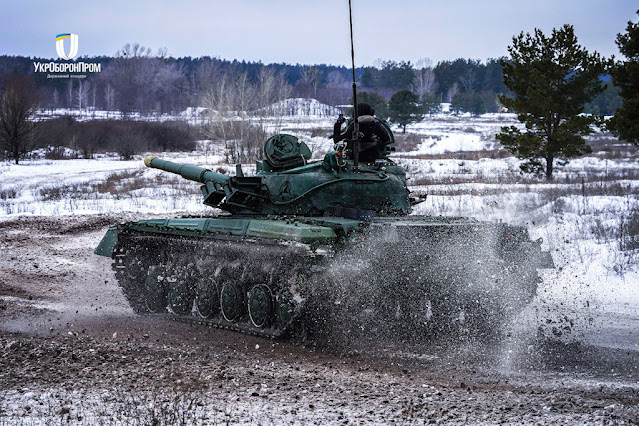
The Ukrainian KhBTZ started trials of the T-64BV Obr.2022 tank. The vehicle is equipped with new fuel system, protected fuel tanks, new Laska K2 12,7 mm AA Machine Gun, new surveillance and sighting systems (most possible the 1G46 instead of the 1G42), new lights and communication and navigations systems.
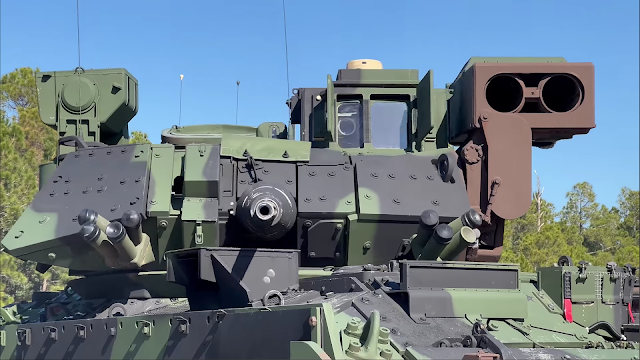
Spartan Soldiers assigned to 2nd Armored Brigade Combat Team, 3rd Infantry Division are the first in the U.S Army to field the newly modernized M2A4 Bradley Fighting Vehicles as part of the Marne division's glidepath to become the most modernized division in the U.S. Army by summer 2023.(U.S. Army Video by Sgt. Trenton Lowery).
Strong start to Ex WINTER CAMP over the last few days with eFP Estonia Battlegroup. Integrating armour, infantry and engineering capabilities whilst sharpening cold weather skills.
Strong start to Ex WINTER CAMP over the last few days with eFP Estonia Battlegroup.
Exercise of the tank reserves of the Armed Forces of Ukraine were held in the Donetsk region. During training, the crews trained to moving out of the concentration area to the firing line, maneuvers as part of a company against a possible enemy, and performing tasks in conditions of a sudden change of the situation.
Adds silent drive, extended silent watch, increased fuel economy and exportable power without sacrificing performance or protection
OSHKOSH, Wis. (January 25, 2022) — Oshkosh Defense, a wholly-owned subsidiary of Oshkosh Corporation (NYSE: OSK), unveiled the first-ever silent drive hybrid-electric Joint Light Tactical Vehicle (JLTV), the eJLTV.
The eJLTV offers the U.S. Army and U.S. Marine Corps the same level of performance and protection as the base JLTV with the addition of silent drive, extended silent watch, enhanced fuel economy, and increased exportable power that enables it to be used in combat and reconnaissance scenarios.
The eJLTV charges the battery while in use, fully recharging the lithium-ion battery within 30 minutes. This eliminates the need for a charging infrastructure, which remains one of the most significant challenges to the widespread electrification of the tactical wheeled vehicle fleet.
“For many years, we’ve been developing, testing and evolving hybrid-electric variants of our heavy and medium-duty tactical wheeled vehicles,” said John Bryant, Executive Vice President for Oshkosh Corporation and President of Oshkosh Defense. “Now, with the eJLTV, we’re offering our military customers an affordable way to electrify their light tactical wheeled vehicle fleet without compromising the off-road performance or superior protection necessary in combat operations.”
This year, the U.S. Army plans to recompete the JLTV program and issue a follow-on production contract in September 2022. The follow-on contract, valued at $6.5 Billion, includes an additional 15,468 vehicles and five order years followed by five options years, extending production through FY32.
“While the U.S. Army has not requested a hybrid-electric JLTV as part of the JLTV recompete, the eJLTV proves that Oshkosh Defense has the team and technical capabilities to produce this highly capable vehicle today,” Bryant concluded.
About the eJLTV:
Maintains the performance and protection of the proven Oshkosh Defense JLTV
Improves fuel economy by more than 20%
Provides battery capacity of 30kWh with opportunity for growth
Eliminates the need for a towed generator by providing export power capacity of up to 115kW
Oshkosh Defense and its parent company, Oshkosh Corporation, have a rich history in electrification and are pushing the boundaries of innovation for customers. One example is the Oshkosh Defense diesel electric Light Combat Tactical Vehicle (LCTV), from which the Oshkosh JLTV is derived. The LCTV was the world’s first military vehicle to finish the grueling SCORE Baja 1000 off-road race. In addition, Oshkosh Defense was awarded the contract to develop and manufacture the U.S. Postal Service’s Next Generation Delivery Vehicle (NGDV), which calls for the delivery of between 50,000 and 165,000 vehicles over a period of 10 years and will consist of both zero-emission battery electric vehicles (BEV) and fuel-efficient low-emission internal combustion engine vehicles (ICE), upgrading the USPS fleet to be increasingly sustainable.
RACER Revs Up for Checkered Flag Goal of High-Speed, Off-Road Autonomy
Vehicle mobility development experiments planned as Phase 1 kicks into gear with fleet delivery and data collections
DARPA’s Robotic Autonomy in Complex Environments with Resiliency (RACER) program is picking up speed after three teams were selected to go to the starting line last October. The program is focused on advancing off-road autonomy of combat vehicles and seeks to demonstrate the ability of these platforms to travel at speeds that maintain pace with manned combat vehicles in complex terrain typical of that seen in real situations. Awards for Phase 1 were given to Carnegie Mellon University, NASA-Jet Propulsion Laboratory, and University of Washington.
The DARPA RACER program’s goal is to develop and demonstrate autonomy technologies that enable unmanned ground vehicles (UGVs) to maneuver in unstructured off-road terrain at the limit of the vehicle’s mechanical systems and at, or beyond, human-driven speeds and efficiencies. “RACER is intended to disruptively advance the integration and fielding of autonomy for robotic combat vehicles into the Army, Marine Corps, and Special Forces communities,” said Stuart Young, RACER program manager in DARPA’s Tactical Technology Office.
In November, the selected teams received the first of the DARPA-provided RACER Fleet Vehicles (RFVs) – a high performance all-terrain vehicle outfitted with world-class sensing and computational abilities – that they are using to develop platform-based autonomy for testing at upcoming DARPA-hosted field experiments.
RFV robots include 360o range and image sensing such as multiple LIDARs, stereo camera pairs, color and infrared imaging cameras, RADAR, event sensors, and inertial measurement sensing. Computation tools have multiple best-of-class graphical processing units (GPUs) in an environmentally protected, shock/vibration proof, and thermally managed Electronics Box (E-Box) that’s specifically engineered for the demands of the RACER high speed, off-road terrain expected in DARPA’s tests.
The sensor and E-box combination currently collects four terabytes of sensor data per hour to support artificial intelligence, machine learning-based autonomy algorithms and stack approaches required of fast-paced combat maneuvers in complex terrain. Modifications for roll protection, sensor/E-box integration, autonomous control, and increased 7kW of power are included in each RFV. The RFVs were integrated by Carnegie Robotics LLC (CRL) and are housed on a Polaris RZR S4 1000 Turbo base drive-by-wire platform.
Four RFVs have been completed, with three already delivered to RACER Phase 1 performers in November 2021. Four more are expected to be built prior to DARPA’s first RACER-hosted field experiment, scheduled for March of 2022 at the National Training Center in Ft. Irwin, California.
DARPA-hosted field experiments will provide the teams with a place to demonstrate the full capability of their autonomy stacks in complex environments. At Ft. Irwin, teams will demonstrate their ability to navigate courses with a variety of terrain and distances up to five kilometers.
To further support software development, DARPA has also collected over 100 terabytes of RFV-based sensor data from more than 500 kilometers of terrain in the Mid-Atlantic and West Coast. Shared with teams and managed within a RACER development tool for efficiency and security, this data will assist with learning approaches. Conceptual government baseline stacks and autonomy architectures will also be provided. They leverage recent products of Combat Capabilities Development Command-Army Research Laboratory initiatives in collaborative robotics, learning, and intelligent systems activities in partnership with basic research university and industry consortia.
The RACER program also has awarded two contracts to develop simulation environments and capabilities to enable development of off-road autonomy algorithms. “The RACER-SIM portion of the program looks to expand current simulation capabilities and physics-based models to support the testing of off-road autonomy in virtual environments,” said Young. “These simulation environments will allow teams to test and validate portions of their autonomy stacks without having to spend large amounts of time and money with field testing.”
Some technical data of EGS (Experimentalwanne Gesamtschutz) technology demonstrator for the NGP (Neue Gepanzerte Plattform) project (courtesy of Kein Mensch Kein Tier )