Showing posts with label ცივი ომი. Show all posts

Monday, March 22, 2021

Soviet Sub Collides with USS Kitty Hawk, 21 March 1984

On March 1984, K-314 (Victor-I class submarine) collided with the aircraft carrier USS Kitty Hawk (CV-63) in the Sea of Japan when USS Kitty Hawk was participated in "Team Spirit" exercises. K-314 shadowed the task group. On 21 March 1984, at the end of the Sea of Japan part of the exercise, K-314 surfaced directly in front of Kitty Hawk, far too close for "Kitty Hawk" to avoid the resulting collision. Neither ship was significantly damaged, although the K-314 could not get underway to proceed home for repairs under her own power. The U.S. Navy stayed on scene for two weeks before the Soviets could send out a seagoing tug to bring her home.


USS Kitty Hawk’s (CV 63) fourteenth deployment in early 1984 found her at the center of a great deal of activity. During the joint United States/Republic of Korea Exercise Team Spirit 84-1, Kitty Hawk’s Battle Group Bravo encountered numerous Soviet forces during the eight-day event. Reconnaissance aircraft overflew the group 43 times while six Soviet surface units and one submarine made an appearance.

It was the submarine, however, that had a lasting impact on the ship and its cruise. At 22:07 on 21 March the submarine surfaced and collided with the carrier. The captain and starboard lookout both saw the silhouette of a sub without navigation lights moving away from the ship. Two SH-3H helicopters inspected the sub without noting any apparent damage, but a large piece of the submarine’s screw had broken off in Kitty Hawk’s hull.

The submarine was believed to be a Victor-I class attack boat, tentatively identified as K-314 (610). During the exercise it had been tracked and “killed” more than fifteen times after it was spotted on the surface fifty miles in front of the battle group.

The collision occurred despite the Incidents at Sea agreement that SECNAV John Warner and Admiral Sergei Gorshkov had signed in 1972. This agreement, designed to uphold the United States’ long cherished belief in freedom of the seas and prevent dangerous and hostile collisions at sea, was ignored in this instance. Chief of Naval Operations Admiral James Watkins reflected, “The reason behind the Soviet submarine captain’s slip in judgment is the only mystery here. He showed uncharacteristically poor seamanship in not staying clear of Kitty Hawk. That should cause concern in Moscow.”

Submarine K-314 after surfacing. Damage to the light body is visible. 

The 80,000-ton carrier had suffered no damage in the collision, but that the 5,200-ton submarine, of what the Western nations designate as the Victor class, was seen on the surface dead in the water with a cruiser standing by to assist. The Soviet ships ignored American offers of assistance, the officials said.


Tuesday, August 25, 2020

Norwegian fighters fly alongside six B-52 bombers


As part of a large American exercise in Europe, six US Air Force nuclear-capable strategic bombers are training along with Norwegian fighters. Both Norwegian F-16AM Fightning Falcons and F-35 Joint Strike Fighters from Royal Norwegian Air Force are participating.


On saturday 22 August 2020, US Air Force B-52H Stratofortress bombers arrived at Fairford, England. The bombers from the 5th Bomb Wing, based at Minot Air Force Base in North Dakota, will train in Europe over a longer period. This is an important training arena for Norway that will strengthen the cooperation between NATO countries.

“I am very pleased that our American friends choose to practice in our surroundings. It is important that they are familiar with Norwegian conditions and can operate together with us if necessary“, says Norwegian Chief of Defence, General Eirik Kristoffersen. The first training mission was conducted with F-16 Fightning Falcons.

The exercise is crucial for every part of air operations. It is a test of Norway’s ability to coordinate operations across NATO’s area of operation. During the actual mission, Norway’s Air Force will train its entire chain – from control and surveillance to its ground personnel and aircraft. It is important that everyone is familiar with the different bases, airspace, and the different operation patterns, to build expertise and confidence among the people that carry out the missions.

This was the fourth time this year that Norwegian fighters conduct training flights with US strategic bombers. On  June 3, 2020 four 5th Bomb Wing B-52H Stratofortresses strategic bombers conducted a long-range strategic mission to Europe and the Arctic. The flight involved missions on the Arctic Ocean and the Laptev Sea. Also in this case the US bombers have trained with Norwegian F-16s and F-35s.


The exercise focuses on the cooperation across NATO countries and partner nations. This type of cooperation strengthens NATO countries’ ability to operate – but even more important, it strengthens our ability to work together during times of conflict and crisis.

The strategic bomber missions, which have been occurring since 2018, provide theater familiarization for aircrew members and opportunities for U.S. integration with NATO allies and regional partners. The bomber missions enhance readiness and provide the training necessary and respond to any potential crisis or challenge across the globe. There have been more than 200 successful flight sorties coordinated with allies and partners since the Bomber Task Force missions began.

Wednesday, June 17, 2020

The Bear Hunters

Photos of aircraft that escorted Tu-95RTs and Tu-142 from the Kipelovo AFB during their missions.


1972. F-4J from VF-84 and USS "Franklin D. Roosevelt" (CV-42) in Atlantic. Photo from Tu-95RTs of 392 ODRAP. Archive of Dmitriy Filonenko.

WSO of F-4E of 57th FIS (Keflavik AFB) is taking photo of Tu-142 of 76 OPLAP (Kipelovo AFB)

RAF Phantom FG.1 escorting Tu-95RTs of 392 ODRAP (Kipelovo AFB) over Northen Atlantic, late 1970s. The photo was taken from tail cabin of Tu-95RTs. Phantom's WSO is taking a photo of Tu-95RTs. Archive of Evgeniy Kalinin (392 ODRAP)

USN F-4J '103-AG' of VF-102 escorting Tu-95RTs of 392 ODRAP (Kipelovo AFB) during its reconnaissance flight of USS Independence (CV-62). Circa 1971-72. The photo was taken by Boris Melenevskiy (392 ODRAP).

USN F-4J '103-AA' of VF-11 escorting Tu-95RTs of 392 ODRAP (Kipelovo AFB) during its reconnaissance flight of USS Forrestal (CV-59) over the North Atlantic circa 1974. Credit to Evgeniy Kalinin (392 ODRAP).

USN F-4B '103' of VF-14 escorting Tu-95RTs of 392 ODRAP (Kipelovo AFB) during its reconnaissance flight to USS John F. Kennedy (CV-67) that in cruise of 1973, Atlantic. The names on the cockpit: Pilot LCDR John Allen, RIO LTJG Dax Cnopp. Archive of Evgeniy Kalinin (392 ODRAP)

RAF Phantom FG.1 XV583 'B' of No. 111 Sqd. (AFB Leuchars) escorting Tu-95RTs of 392 ODRAP (Kipelovo AFB) over North Atlantic. 1970s.
The photo was taken by Tu-95RTs crew. Archive of Evgeniy Kalinin (392 ODRAP)

Two USN F-4J of VF-102 escorting Tu-95RTs of 392 ODRAP during its reconnaissance flight of USS Independence (CV-62). Circa 1974-75. The photo was taken by Boris Melenevskiy (392 ODRAP).

Royal Navy Phantom FG.1 'R-011' of 892 NAS escorting Tu-95RTs of 392 ODRAP (Kipelovo AFB) over Atlantic. Circa 1978. Archive of Evgeniy Kalinin (392 ODRAP)

RAF Phantom FG.1 XV583 'B' of No. 111 Sqd. (AFB Leuchars) escorting Tu-95RTs of 392 ODRAP (Kipelovo AFB) over North Atlantic. 1970s. Archive of Evgeniy Kalinin (392 ODRAP).

F-4E of 57th FIS (Keflavik AFB) escorting Tu-95RTs of 392 ODRAP (Kipelovo AFB) over North Atlantic. Circa 1978-85. Archive of Evgeniy Kalinin (392 ODRAP)

F-14A of VF-102 from USS America (CVA-66) over North Sea during Ocean Safari 85. Photo from Tu-95RTs of 392 ODRAP. The fall of 1985

USN F-14A '112' of VF-143 escorting Tu-95RTs of 392 ODRAP (Kipelovo AFB) over Atlantic during USS 'America' (CV-66) cruise 1977-78. Archive of Evgeniy Kalinin (392 ODRAP)

USN F-14A '214/AB' of VF-33 escorting Tu-95RTs of 392 ODRAP (Kipelovo AFB) over Atlantic during USS 'America' (CV-66) cruise (circa 1984). Archive of Evgeniy Kalinin (392 ODRAP)

Two USN F-14A '214/AB' and '210/AB' of VF-33 escorting Tu-95RTs of 392 ODRAP (Kipelovo AFB) over the North Atlantic during USS 'America' (CV-66) cruise circa 1985. Credit to Evgeniy Kalinin (392 ODRAP)

USN Р-3B 'LC-81' (BuNo 152761) of VP-8 escorting Tu-95RTs of 392 ODRAP (Kipelovo AFB) over North Atlantic circa 1979-80. Photo credit to Evgeniy Kalinin (392 ODRAP)

US Navy P-3 and Tu-142M from 76 OPLAP (Kipelovo AFB). Credit to 76 OPLAP archive

F-14A of VF-102. Photo from Tu-95RTs of 392 ODRAP. Late 1980s

F-14A of VF-102 from USS America (CVA-66) over North Sea during Ocean Safari 85. Photo from Tu-95RTs of 392 ODRAP. The fall of 1985

24 July 1978. Interception of Tu-142 76 OPLAP (Kipelovo AFB) of crew of Alexander Tsvetkov by the RNoAF F-104G of 331 squadron (Bodo AFB). Archieve of Victor Kibalnik

USS 'America' (CV-66) in Atlantic near Puerto Rico on February 10, 1986. The photo was taken by Tu-95RTs crew of 392 ODRAP. Archive of Evgeniy Kalinin (392 ODRAP)

USN Р-3C 'LN-40' (BuNo 156510) of VP-45 escorting Tu-95RTs of 392 ODRAP (Kipelovo AFB) over Northern Atlantic circa 1977. Photo credit to Evgeniy Kalinin (392 ODRAP)


Friday, May 29, 2020

B-1s integrate with Ukrainian and Turkish aircraft for first time

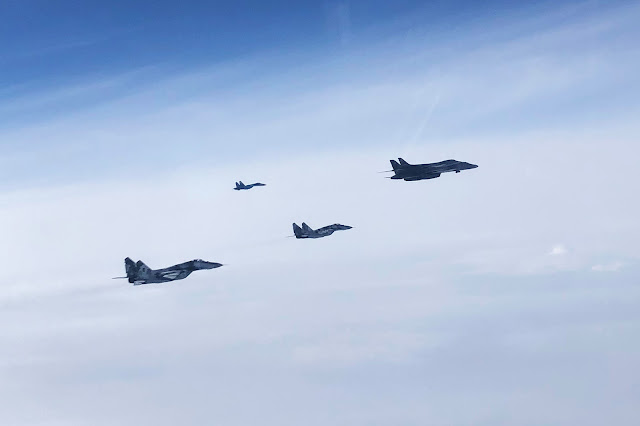
Two B-1B Lancers from Ellsworth Air Force Base, South Dakota, conducted a long-range, long duration strategic Bomber Task Force mission throughout Europe and the Black Sea region, May 29, 2020.


This marked the first time that a Bomber Task Force mission integrated with Ukrainian Su-27 Flankers and MiG-29 Fulcrums and Turkish KC-135s.

“Bomber Task Force missions to Europe demonstrate commitment to our allies and partners all while providing a clear deterrence message to any adversary,” said Gen. Jeff Harrigian, U.S. Air Forces in Europe and Air Forces Africa commander. “The integration of our strategic bomber presence across Europe proves that the U.S., alongside any ally or partner, stands ready to deter, and if needed, can employ these capabilities together.”

The flight also included integration and interoperability training with Polish F-16s and MiG-29s and Romanian F-16s and MiG-21s, which provided escort and combat patrol overwatch in the Black Sea region.

A KC-135 Stratotanker from the 100th Air Refueling Wing, RAF Mildenhall, England, Turkish and U.S. KC-135s based out of Incirlik Air Base, Turkey, and other NATO aerial refueling aircraft enabled the B-1 to complete the round trip from Ellsworth Air Force Base without delay, while also providing aerial refueling support to our partner-nation aircraft. 

Additionally, the B-1s integrated with Greek F-16 air policing for an overflight of Skopje, North Macedonia. 

“The Bomber Task Force missions demonstrate to our NATO Allies, including our newest member - North Macedonia - that these strategic missions enhance the readiness and training necessary to respond to any potential crisis or challenge around the globe,” said Gen. Tod D. Wolters, U.S. European Command commander. “The integration and interoperability with our NATO Allies during these missions, be it aerial tanker support or fighter escorts, are indelible actions that show the Alliance is as strong as I've ever witnessed.”

Bomber missions familiarize aircrew with air bases, airspace, and operations in different geographic combatant commands. These missions build proficiency and confidence, and they demonstrate the credibility of our forces to address a global security environment that is more diverse and uncertain than at any other time in our history.


Thursday, November 14, 2019

NATO-ს ფართომაშტაბური სწავლება "რკინის მგელი — 2019"

სანამ სტატიას წაიკითხავთ, გთხოვთ გადახვიდეთ მითითებულ ბმულზე (ყავისფრად მონიშნული ტექსტი) და მოიწონოთ ჩვენი სამხედრო თემატიკის გევრდი - No Man's Land

................................................................................................................................................................................

ლიტვაში, პაბრადეს პოლიგონზე, NATO-ს ფართომაშტაბური სწავლება "რკინის მგელი — 2019" დაიწყო (Iron Wolf ან ლიტვურად Geleżinis Vilkas). სწავლებებში 11 ქვეყნის (ლიტვის, ბელგიის, ჩეხეთის, ბრიტანეთის, ესტონეთის, აშშ-ს, პოლონეთის, ნორვეგიის, ნიდერლანდების, პორტუგალიისა და გერმანიის) 4000 სამხედრო მოსამსახურე და 1000 ერთეულზე მეტი ტექნიკა იქნება ჩართული.


"მანევრების მიზანს, რომელშის ლიტვისა და NATO-ს სხვა წევრი ქვეყნები არიან ჩართულები, ძალების მიერ ამოცანების ეფექტურად დაგეგმისა და შესრულებისთვის შეთანხმებული მოქმედების დახვეწა წარმოადგენს" - ნათქვამია NATO-ს პრეს რელიზში.

სწავლება 18 ნოემბრამდ ეგაგრძელდება, რის შემდეგაც ტექნიკა და პირადი შემადგენლობა მუდმივი დისლოკაციის ადგილებს დაუბრუნდება.

Wednesday, October 9, 2019

ინერციული ნავიგაციის მწვერვალი

სანამ სტატიას წაიკითხავთ, გთხოვთ გადახვიდეთ მითითებულ ბმულზე (ყავისფრად მონიშნული ტექსტი) და მოიწონოთ ჩვენი სამხედრო თემატიკის გევრდი - No Man's Land

................................................................................................................................................................................

AIRS (Advanced Inertial Reference Sphere - გაუმჯობესებული ინერციული სანავიგაციო სფერო)

ის რასაც ფოტოზე ხედავთ არაა მომავლის ფილმიდან გადმოტანილი მოწყობილობა - ეს ცივი ომის დროს ამერიკელების მიერ შექმნილი ინერციული სანავიგაციო მოწყობილობაა, რომელსაც  AIRS (Advanced Inertial Reference Sphere - გაუმჯობესებული ინერციული სანავიგაციო სფერო) ეწოდება. აღნიშნული მოწყობილობა საკონტინეტთაშოირს რაკეტა LGM-118A Peacekeeper-ზე გამოიყენებოდა და მას წარმოუდგენელ სიზუსტეს ანიჭებდა. თვითონ LGM-118A Peacekeeper წარმოადგენს ცივი ომის ეპოქის ამერიკის ბირთვული რაკეტების განვითარების მწვერვალს, მაგრამ ეს დონე საკმაოდ მაღალი ფასისა და გაწელილი ვადების ხარჯზე იქნა მიღწეული. 

ტექნიკოსი AIRS-ის ცურვადობას/ბალანნს ამოწმებს

მიუხედავად იმისა, რომ აღნიშნულმა რაკეტამ აჯობა მის ნაკლებად დახვეწილ თანამოძმეს - Minuteman III-ს და ამასთან იყო ძაან ბევრ ასპექტში გაუმჯობესებული და მისი სანავიგაციო სისტემის გული, AIRSი, ყველაზე დახვეწილ ტექნოლოგიურ მქნილებას წარმოადგენდა, მისი მწყობრში დატოვების მთავარ მიზეზად სწორედ იმავე სისტემის მიერ მიღწეული სიზუსტე წარმოადგენდა.

აღნიშნული ფოტო მარტინ მილერის წიგნიდან "Weapons Of Mass Destruction: Specters Of The Nuclear Age"-დანაა ამოღებულ, რომელშიც ის ამ სფეროს შემდეგ დახასიათებას აძლევს:

"რაკეტა Peacekeeper-ში გამოყენებულ ინერციული დამიზნების მოდულს ტექნიკურად "Advanced Inertial Reference Sphere" (AIRS) ეწოდება. AIRS-ის შექმნით გადახედილი იქნა საკონტინენტთაშორისო რაკეტების სიზუსტის კონცეფცია. სფერო, იმის ნაცვლად, რომ კარდანულ საკიდარზე ყოფილიყო დამაგრებული, გარე კორპუსში ჩასხმულ ფტორნახშირბადის სითხეში დაცურავს. გიროსკოპები და აქსელერომეტრები სფეროს შიგნითაა მოთავსებული, შიგნითა ასევე განთავსებული სფეროს სტაბილური ორიენტაციის უზრუნველყოფისტვის განკუთვნილი სამი ჰიდრავლიკური საყრდენი კლაპანი და ტურბოტუმბო. სფერო 19 000 ცალკეული დეტალისგან შესდგება დ ამისი აწყობა უზარმაზარ შრომასთანაა დაკავშირებული".


სისტემა 9000 მილზე მფრენ რაკეტას 40 მეტრიან წრიულ ცდომილებას აძლევს (circular error probable - CEP). ინერციული ნავიგაციის სისტემის დრეიფი საათში 1,5 x 10 ^ -5 გრადუსს უტოლდება და ეს მონაცემი ინერციულ ნავიგაციაში უმაღლეს მწვერვალს წარმოადგენს. თუმცა ის საკმაოდ ძვირიცაა - 1989 წელს, სფეროში განთავსებული ერთი აქსელერომეტრის (სფეროში ასეთი სულ სამია) ფასი  300 000 დოლარს შეადგენდა და მის დასამზადებლად ექვსი თვე იქნა დახარჯული. აღსანიშნავია რომ 89 წელს აწყობილი იქნა პირველი სფერო, ხოლო თვითონ LGM-118A Peacekeeper-ის ტიპის პირველი რაკეტები მწყობრში 1986 წელს ჩადგა და მათი საბრძოლო ფასეულობა ამ სანავიგაციო სისტემის გარეშე ნულის ტოლფასი იყო.

მარცხნივ - AIRS-ის საჩვენებელი მაკეტი, მარჯვნივ მისი აწყობის სხვადასხვა სტადია

დღეისთვის ინერციული ნავიგაციისთვუის ლაზერული გიროსკოპები გამოიყენება, რომლებიც ასევე კორექციას გარე წყაროებიდან (GPS ან ГЛОНАСС) იღებენ. მათი სიზუსტე გაცილებით მაღალია და ამასთან ისინი უფრო კომპაქტურები და მსუბუქები არიან, მაგრამ როგორც გარე წყაროების შესწორებებისგან დამოუკიდებელი სისტემა, AIRS, ინერციული ნავიგაციის განვითარების დასასრულია.

თანამედროვე, წრიულ-ლაზერული გიროსკოპული, სანავიგაციო სისტემა


დეტალური ინფორმაცია იხილეთ ბმულზე - This Isn't A Sci-Fi Prop, It's A Doomsday Navigator For America's Deadliest Cold War ICBM

რუსეთი, NATO და შავი ზღვის რეგიონი

სანამ სტატიას წაიკითხავთ, გთხოვთ გადახვიდეთ მითითებულ ბმულზე (ყავისფრად მონიშნული ტექსტი) და მოიწონოთ ჩვენი სამხედრო თემატიკის გევრდი - No Man's Land

................................................................................................................................................................................

შავი ზღვა დასავლეთსა და რუსეთს შორის ევროპის მომავლისთვის ბრძოლის მნიშვნელოვან რეგიონს წარმოადგენს. 2014 წლისთვის, როდესაც რუსეთი ყირიმში შეიჭრა, რეგიონში უკვე 20 წლის მანძლზე მიმდინარეობდა კონფლიქტები და რუსეთმა 2008 წლამდე სხვა ქვეყნების წინააღმდეგ ოთხჯერ გამოიყენა სამხედრო ძალა.


2019 წლის მარტში, ბუქარესტში განხორციელებულ სამიტზე, რუმინული მხარის მიერ გაკეთებული განცხადების თანახმად - რუსეთი ასევე იყენებს ინფორმაციულ, ეკონომიკურ, ენერგეტიკულ და საიდუმლო ინსტრუმენტებს, რათა განახორციელოს თავისი მიზნები, რომელთა მიხედვითაც შავი და აზოვის ზღვა უნდა გადაიქცეს ვირტუალურ შიდა სივრცედ, რომელზეც რუსეთს ექნება მოქმედების ისეთივე თავისუფლება, როგორიც მას დღეს კასპიის ზღვაში აქვს.

იმ დროს როდესაც შავი ზღვის სანაპიროს ქვეყნები ცდილობენ დაიცვან თავი რუსეთის მტრული ჩარევისგან და სხვა შიდა და გარე პოლიტიკური ფაქტორებისგან და იმავდროულად ევროკავშირის ან ჩრდილოეთ ატლანტიკური ალიანსის წევრობა ან წევრობის სურვილი დიდ გავლენას ახდენს მათი ინტერესების თანხვედრასა ან შეუთანხმებლობაზე. ამ პირობებში დასავლეთის ქვეყნებს უჭირთ გაერკვნენ და საერთო ინტერესების დასაცავად განახორციელონ თანმიმდევრული პოლიტიკა, განახორციელონ საერთო მდგრადი სტრატეგია და წინააღმდეგობა გაუწიონ რუსეთის მხრიდან არაკეთილმიზნობრივ გავლენასა და დაშინებას.

მნიშვნელოვანი შედეგები


შავ ზღვის პერიფერიებზე გავლენის აღდგენაში რუსეთისთვის თვითონ შავ ზღვას უკავია წამყვანი როლი.

  • რუსების მიერ ყირიმის ოკუპაციამ და მილიტარიზაციამ, შავი ზღვის ფლოტის მოდერნიზაციამ და სამხრეთ სამხედრო ოლქის შეიარაღებული შესაძლებლობების გაფართოვებამ, გააძლიერა მისი გავლენა რეგიონში და ასევე გაზარდა რუსული ძალის პროეცირების მაშტაბები ხმელთაშუაზღვასა და ლევანატზე.
  • მოსკოვის ძირითადი მიზნები რეგიონში არსებული ყველა ქვეყნის პირობების გათვალისწინებითაა შედგენილი და მათ რომელიმე ბლოკში გაერთიანებას და რუსეთის ეკონომიკური, პოლიტიკური და მავნებელი გავლენის წინაშე მათ დაუცველად დატოვებას ისახავს მიზნად.


რეგიონის ქვეყნების განსხვავებული და ხშირად საპირისპირო ინტერესები  რუსეთის გავლენისა და რეგიონში დაშინების დასაპირიპირებლად დასავლეთის მიერ ერთიანი მდგრადი სტრატეგიის შემუშავებას ართულებს.

  • დასავლეთის ნებისმიერი სტრატეგია პირველ რიგში საკმაოდ ეფექტური უნდა იყოს, რათა დაუპირისპირდეს რუსეთის საინფორმაციო ოპერაციებს, მავნე გავლენას და ჰიბრიდულ საფრთხეებს.
  • დასავლეთი და ევროკავშირი უფრო საგრძნობლად უნდა ჩაეერთონ არასამხედრო საკითხებში, მათ შორის განაახლონ სამშვიდობო მოლაპარაკებები და ეკონომიკური პროექტების, რეგიონალური ინფრასტრუქტურისა და ინტეგრირებული ინიციატივების მხარდაჭერა, რაც რუსეთის გავლენისგან წინააღმდეგობის გაწევაში დაეხმარება.
  • შეკავების საიმედო სამხედრო პოზიცია არაა აუცილებელი რუსეთის შესაბამისი იყოს. რუსული რაკეტების საფრთხისგან დასაცავად მეწინავე სანაპირო და ჰაერსაწინააღმდეგო თავდაცის სისტემების გაშლამ რუმინეთსა და ბულგარეთში, NATO-ს სწავლებების და უკრიანისთვის და საქართველოსთვის დახმარების გაფართოებამ, რათა ამათ მოახერხონ ეროვნული თავდაცვითი შესაძლებლობების გაუმჯობესება, შეიძლება გააძლიეროს რეგიონალური შეკავების ძალისხმევა.
  • სპეციალური ორმხრივი პარტნიორობა თანხხმვედრი პრიორიტეტების სფეროში - კიდევ ერთი გზაა რეგიონალური თანამშრომლობის განვითარებისთვის.

რეკომენდაციები

  • რადგანაც არ არსებობს შავი ზღვის უსაფრთხოების სუფთა სამხედრო გზით მოგვარების გზა, ამიტომ დასავლეთის ეფექტურმა სტრატეგიამ რეგიონის მოსახლეობის მიზნებთან მიმართებაში უკეთესი კონკურენცია უნდა გაუწიოს რუსეთს. ამისთვის აუცილებელია უფრო ეფექტური და უფრო ინტეგრირებული სტრატეგიული საკომუნიკაციო ძალისხმევა, და ასევე გააძლიერებს კიბერ და ჰიბრიდული საფრთხეების მიმართ ძალისხმევას.
  • ასევე არსებობს შეკავების უფრო საიმედო და მდგრადი სამხედრო სისტემის აუცილებლობა. NATO-მ და მოკავშირეებმა იმის ნაცვლად რომ შეესაბამებოდნენ რუსეთის სამხედრო შესაძლებლობებს ყველა მიმართულებაზე, რეგიონებში შეუძლიათ შეკავების მიზნით გაშალონ მეწინავე ჰსთ და სანაპირო დაცვის სისტემები რუმინეთსა და ბულგრაეთში, რათა ეფექტურად შეაკავონ შავი ზღვიდან მომავალი რუსული სარაკეტო საფრთხე. უკრაინასთან და საქართველოსთან მუმდივი თანამშრომლობა მათი ეროვნული უსაფრთხოების გაძლიერებაში ასევე დაეხმარება რეგიონალურ შეკავებას.
  • დასავლეთი და ევროკავშირი უფრო საგრძნობლად უნდა ჩაეერთონ არასამხედრო საკითხებში, მათ შორის განაახლონ სამშვიდობო მოლაპარაკებები და ეკონომიკური პროექტების, რეგიონალური ინფრასტრუქტურისა და ინტეგრირებული ინიციატივების მხარდაჭერა, რაც რუსეთის გავლენისგან წინააღმდეგობის გაწევაში დაეხმარება
  • "ბრძოლის" შავი ზღვის ფარგლებს გარეთ გადატა - ეს კიდევ ერთი საშუალებაა. მოკავშირეებს და პარტნიორ-თანამოაზრეებს შეუძლიათ გამოავლინონ სხვა პრობლემატური რეგიონები, სადაც მოწყვლადი იქნება რუსული ინტერესები და შემდეგ მიანიშნონ კრემლს, რომ შავ ზღვაში შემდგომი აგრესიუოი ქმედებები გამოიწვევს სხვა რეგიონში მათი პოზიციების დასუსტებას.