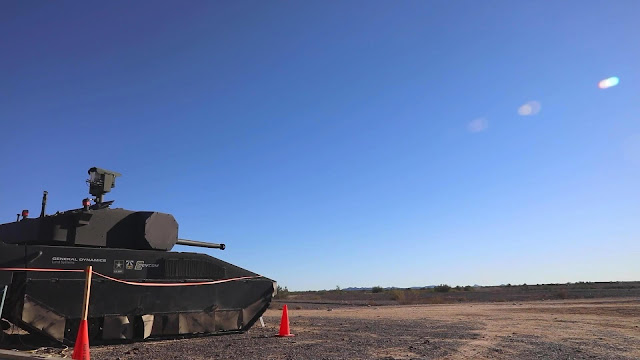
The US Army"s Griffin ATLAS with integrates new gyro-stabilized Thermal Sighting Unit (TSU) conduct live fire exercise during Project Convergence 21.
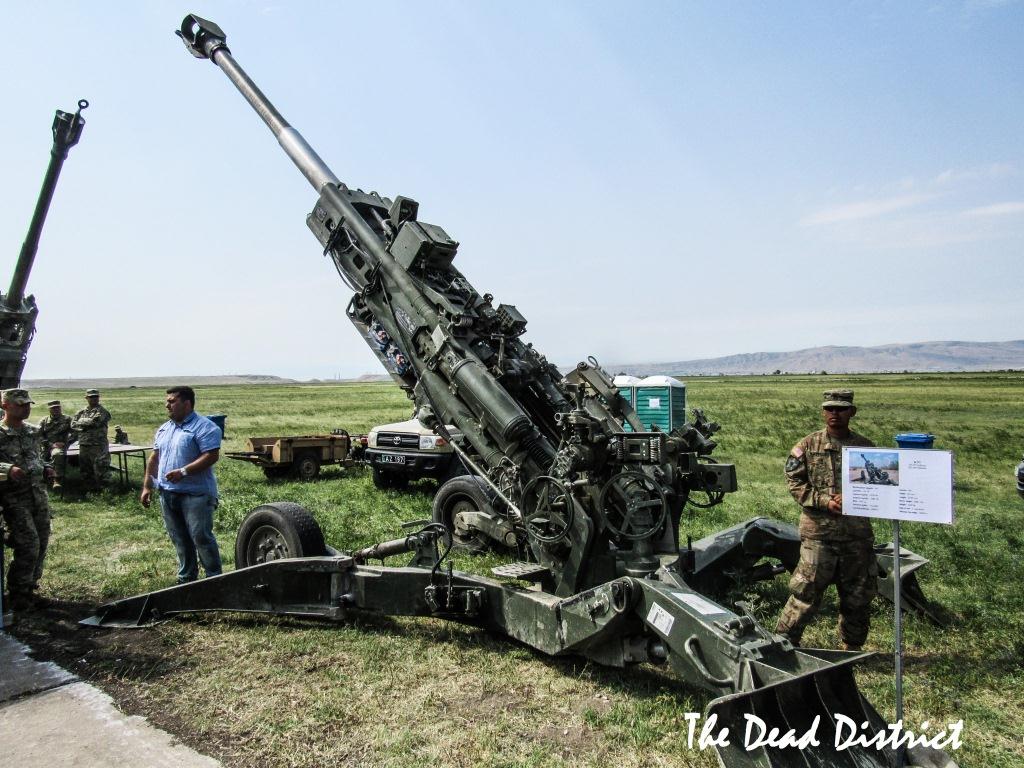
A Stryker/LAV-700 fitted with ALAS-MC turret conduct live fire exercise
As i walk through the valley of the shadow of death, I have no fear because I am the baddest motherfucker in whole valley.
The US Army"s Griffin ATLAS with integrates new gyro-stabilized Thermal Sighting Unit (TSU) conduct live fire exercise during Project Convergence 21.
A Stryker/LAV-700 fitted with ALAS-MC turret conduct live fire exercise
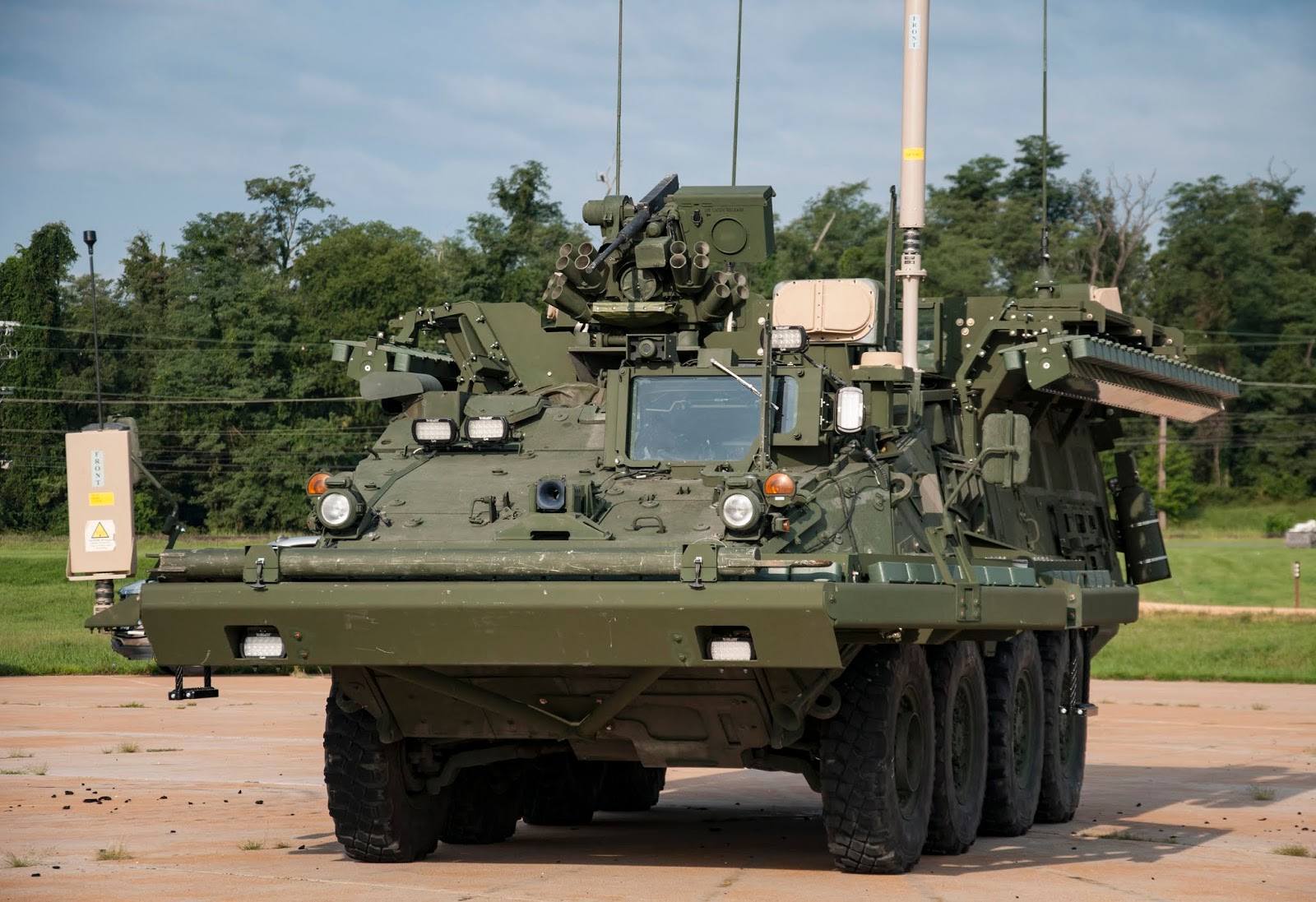
WASHINGTON, D.C. – OCTOBER 25, 2021 – General Dynamics Land Systems, a global leader in providing innovative, high technology and next-generation ground combat solutions to customers, announces today a Strategic Teaming Agreement with Epirus, Inc., a high-growth technology company developing directed energy systems that enable unprecedented counter-electronics effects. GD and Epirus will collaborate to integrate the Leonidas directed energy system and broader high-power microwave technology into the U.S. Army’s Stryker and other manned and autonomous ground combat vehicles for enhanced mobile Short Range Air Defense (SHORAD) capabilities.
“General Dynamics Land Systems continues to evolve the Army’s largest and most reliable ground combat vehicle fleet with next-generation innovation and high-tech solutions,” said Danny Deep, President of General Dynamics Land Systems. “This partnership with Epirus benefits the Army’s Stryker mobile SHORAD formations by offering cutting-edge, counter-electronics and counter-swarm capabilities.”
In addition to Stryker upgrades, the company also is developing a class of robotic combat vehicles that feature modular architecture to maximize scalability and support future mission needs, Deep said.
Leonidas’ integration with Stryker enables a fully mobile counter-electronics solution and demonstrates the system’s flexible application programming interface (API) and ability to integrate with existing ground-based, airborne and maritime systems for operation across domains. The system’s open API allows for maximum interoperability to meet the mission needs of multiple customer sets. Leonidas delivers unprecedented power and performance in a dramatically smaller form factor and is the only directed energy weapon with a proven ability to counter swarming drones and execute precision strikes at range.
“Having the support of one of the largest, most innovative and technologically advanced defense contractors further deepens our industry credibility and the market appeal for Epirus’ directed energy product portfolio. With Leonidas integrated into GD’s combat vehicle fleet, we are unlocking new SHORAD and counter-electronics capabilities to equip our warfighters with combat effective systems that dismantle the threats of today and tomorrow. I look forward to continuing our partnership with our General Dynamics Land Systems colleagues and know that, together, we can deliver on our customers’ mission needs,” said Leigh Madden, Epirus Chief Executive Officer.
This year, the Army will fire live anti-tank warheads at two rival Active Protection Systems to assess how best to protect lightweight armored vehicles like its 8×8 Stryker. The contenders in this “live fire characterization activity” – it isn’t officially a test – will be the German Rheinmetall Active Defense System (ADS) and the Israeli Rafael Trophy Vehicle Protection System (VPS). Not participating, our sources tell us, is the American Artis Iron Curtain, which was the Army’s original pick to protect the Stryker but was subsequently rejected after Army testers found it wanting.
Now, the Rheinmetall ADS and the Rafael Trophy VPS won’t be installed on actual Stryker vehicles. Instead, they’ll be set up on specially designed armored targets. That will allow the Army to measure precisely what damage, if any, gets through the active protection systems from different kinds of attacks.
“The Army intends to conduct live fire characterization activities with the two hard-kill active protection systems on platform agnostic test rigs,” said Ashley John, spokesperson for the Program Executive Officer – Ground Combat Systems (PEO-GCS).
A “hard kill” system, like ADS and VPS, is one that physically shoots down incoming anti-tank missiles and rockets. “Soft kill” decoys and jamming, by contrast, just make the enemy miss. Hard-kill has worked well on heavy tanks. Israel, Russia and the US all use it. But, as the Army has painfully discovered, it’s much harder to get it to work on lighter vehicles – which need protection the most. For the Stryker in particular, while the reliable, affordable vehicle has become an Army workhorse around the world — with variants carrying everything from infantry to anti-aircraft missiles, 30mm cannon, jammers, and even lasers — the service has struggled for years to make it more survivable in high-intensity combat.
What’s the hold-up? Historically, hard-kill Active Protection Systems are heavy and bulky; they need a lot of electrical power to run radars and targeting computers; and when they intercept incoming warheads, they may cause them to prematurely detonate or burst into shrapnel – “residual penetration” that a heavily armored tank can shrug off, but which a Stryker or other lightly armored vehicle cannot.
The Germans and Israelis have taken different approaches to solving this problem. Rheinmetall’s ADS uses a large number of small explosive charges distributed around the vehicle, computer-controlled to detonate at the precise millisecond to cut apart incoming warheads just before they detonate. Rafael’s Trophy uses a compact missile launcher, which lobs mini-missiles at incoming anti-tank missiles and rockets to intercept them further out. There’s a big debate over which of the two approaches is safer, both for the vehicle being protected and for foot troops or nearby civilians.
For continue the reading follow the link - Army Tries (Again) To Protect Stryker: Rafael or Rheinmetall?
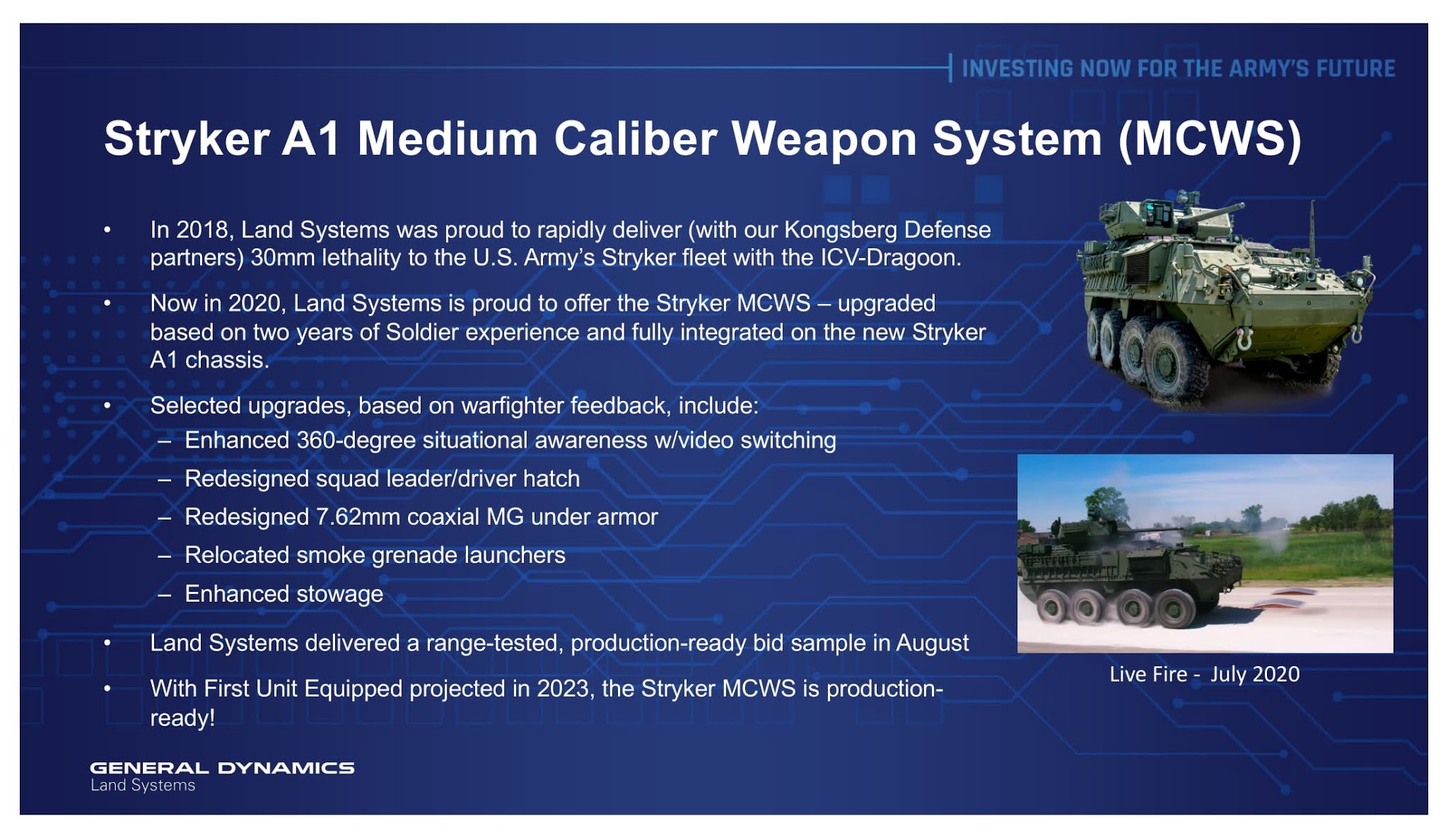
BEMOWO PISKIE TRAINING AREA, Poland - U.S. Soldiers, assigned to the Eagle Troop and Fox Troop, 2nd Squadron, 2nd Cavalry Regiment, became the first U.S. unit to fire the coveted Mark 310 programmable air burst munitions at the Bemowo Piskie Training Area, Poland, Nov. 12, 2020 in support of NATO's enhanced Forward Presence Battle Group-Poland. The troops were selected due to their up-gunned Stryker Infantry Carrier Vehicle - Dragoons, which are the only vehicles in the U.S. Army equipped with the quick-firing cannon weapon platform that allows for the use of these extremely precise and deadly 30mm rounds.
Jack Cooper, lethality consultant, on behalf of Program Manager-Maneuver Ammunition Systems Col. Paul Alessio and PM-MAS Medium Caliber Lt. Col. Andre Johnson, and a support team from General Dynamics Land System flew in from Fort Benning, Georgia to lend their expertise.
“What is special about these munitions is that they have a three-mode function," said Cooper. "They can be shot and point detonated, where they explode when they hit the target; shot with a deadly delay, where they explode after they hit the target; or, they can be shot in air-burst mode, where we have the ability to set time, distance, width and depth.”
Cooper explained that the onboard computer sets a box around the target, and the operator fills the box with a certain pattern to get the effectiveness and conditions desired. Once the Soldier pulls the trigger, the user-friendly computer system does the work with deadly accuracy.
“So far, the system is performing very well,” said Cooper. “It's a game changer.”
The squadron's master gunner Staff Sgt. Bryan Miller, who is responsible for fielding the equipment, agreed and said the new rounds will give 2nd Cavalry the upper hand against any potential aggressor in the region.
“This is it," said Miller. "We have this round in our go-to-war stock here right now. If the enemy horde was to come over that hill, we could get that ammunition up and running and ready to go. And now, our soldiers have the confidence in actually shooting, not a training round, but the full service ammo.”
Miller elaborated.
“This is the first time in my career that I have seen them actually using service ammunition, so to be able to fire this is awesome,” said Miller. “This is a first ever.”
• In FY19, the Army completed Phase II of the TrophyAPS testing. DOT&E will summarize the demonstrated performance in a combined OT&E/LFT&E report in 2QFY20 to support the UMR.
• Based on the demonstrated performance, the Army issued a directed requirement to procure and install Trophy APS systems on Abrams for a total of four Armored Brigade Combat Teams, by the end of FY20.
• In FY18, the Army completed Phase I Iron Fist APS testing on the Bradley. This test supported the Army Requirements Oversight Council (AROC) meeting on November 30, 2018, where the Army decided to move forward with the Phase II Iron Fist – Light Decoupled APS program. Phase II testing is currently scheduled for FY21.
• In FY18, the Army completed Phase I Iron Curtain APS testing on the Stryker. In FY19, the Army pursued and tested two additional Stryker APS solutions: Advanced Modular Armor Protection – Active Defense System by UBT/Rheinmetall and the Trophy Light system by DRS/Rafael. The Army has not selected any of these solutions due to the demonstrated performance and the systems maturity.
• The Trophy APS includes search radars to detect, identify, and track incoming threats, and a set of kinetic projectiles intended to destroy the threat or cause its early detonation. The Abrams base armor is expected to absorb post‑engagement threat residuals (threat by-products generated after the collision). The Trophy APS adds approximately 8,600 pounds to the platform. The Army has integrated the Trophy system into the tank’s situational awareness system.
• The Iron Fist – Light Decoupled APS includes radars and optics to detect, identify, and track incoming threats, and a set of explosive projectiles intended to destroy or divert the threat. The system adds approximately 1,543 pounds to the platform. The fielded Bradley A3 does not generate sufficient power to operate the APS, while the Bradley A4 power components, currently under development, can support this APS solution.
• The Army evaluated three different solutions for Stryker APS: Iron Curtain, Advanced Modular Armor Protection – Active Defense System, and the Trophy Medium Variant system. Each vendor had unique technical solutions with different countermeasure mechanisms. The Army did not select any of the three systems evaluated.
ამერიკის არმიის ჯავშანტექნიკის აქტიური დაცვის სისტემებით აღჭურვის შესახებ ბლოგზე უკვე არაერთხელ დაიწერა, თემატური სტატიები იხილეთ მოყვანილ ბმულებზე:
თემატური სტატიები იხილეთ ბმულებზე:
აშშ-ს არმიის შეიარაღების კვლევის, განვითარებისა და შემუშავების ცენტრმა (Armament Research, Development and Engineering Center (ARDEC)) 15 მაისს, ჯორჯიის შტატში მდებარე ფორტ ბენნინგში (Fort Benning), წითელი ღრუბლის სასროლეთზე, ახალი კოშკურით აღჭურვილი M1126 Stryker-ის საცეცხლე გამოცდები გამართა.