
At the IDEF-2021 exhibition the Turkish company Anzatsan unveiled upgraded BTR-80 APC as carrier of MKEK 120mm mortar system.


At the IDEF-2021 exhibition the Turkish company Anzatsan unveiled upgraded BTR-80 APC as carrier of MKEK 120mm mortar system.

The newest Russian combat reconnaissance amphibious vehicle, which has not even received its own name, is intended for conducting close and deep tactical reconnaissance, carrying combat, marching and patrolling of troops, as well as for combating enemy reconnaissance and reconnaissance and sabotage groups.
In the design of the BRM chassis (wheel arrangement 4x4), units and assemblies of the Atlet family cars are used. The layout is made with the location of the power compartment in the middle of the armored body of the vehicle.
On the sides and in the stern, one single-wing door is made for embarking and disembarking a combat crew. BRM is equipped with optical-electronic reconnaissance complexes with thermal imagers, radar reconnaissance means and small drones, radio direction-finding and acoustic reconnaissance means. Together, all this equipment is connected by an onboard information and control system (CIUS).
The armament on the BRM is the Arbalet-DM remote-controlled combat module (armament - 12.7-mm 6P49 Kord machine gun or 7.62-mm PKTM machine gun).
A number of experts suggest that the newest BRM may eventually replace the armored reconnaissance and patrol vehicle BRDM-2, which was mass-produced from 1963 to 1982 by the Gorky Automobile Plant and from 1982 to 1989 by the Arzamas Machine-Building Plant.
BRM is an initiative development of the manufacturer and so far, even, strictly speaking, is not a military product. The car does not yet have an advertising passport and an export passport. Therefore, BRM with difficulties broke through to the "Army-2021".


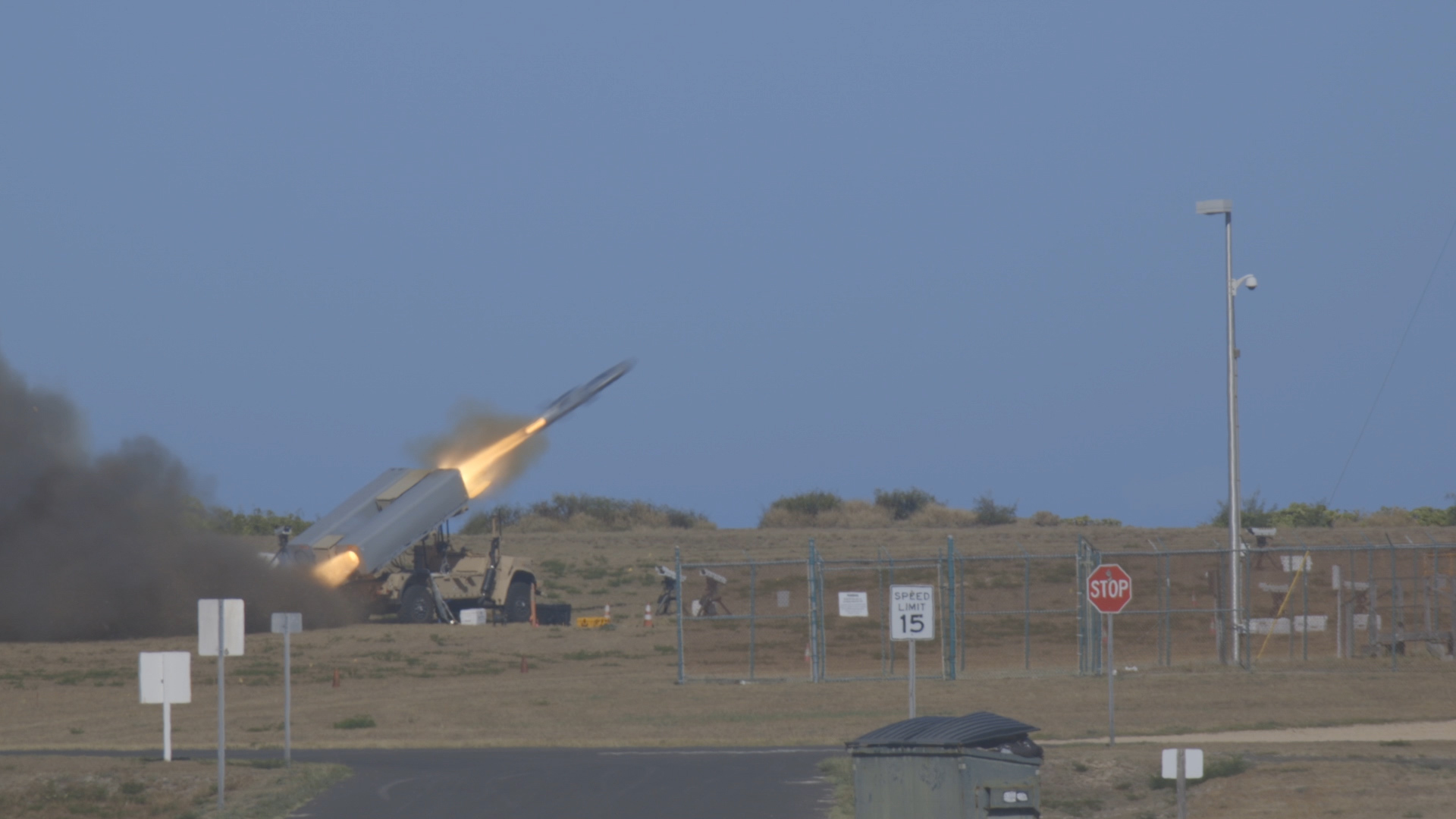
A Navy Marine Expeditionary Ship Interdiction System launcher, a command and control vehicle and a Joint Light Tactical Vehicle are transported by a U.S. Navy Landing Craft Air Cushion from Pacific Missile Range Facility Barking Sands, Hawaii, out to U.S.S. San Diego, Aug. 16, 2021. The movement demonstrated the mobility of a Marine Corps fires expeditionary advanced base, a core concept in the Marine Corps’ Force Design 2030 efforts. U.S. Navy and Marine Corps units came together from across 17 time zones as they participated in Large Scale Exercise 2021. (U.S. Marine Corps photo by Cpl. Luke Cohen, released).




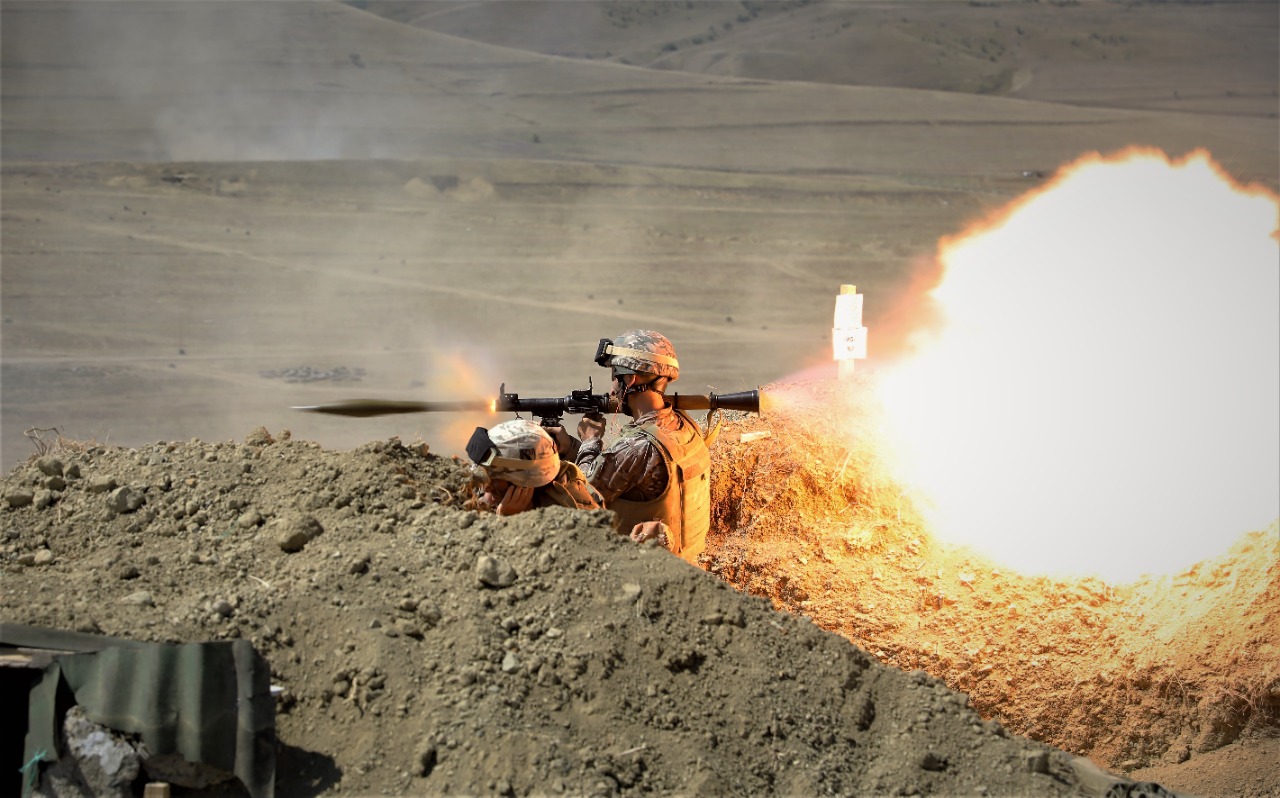
This is the tenth Agile Spirit exercise hosted by Georgia. Launched in 2011, the drills were an annual U.S. Marine Forces Europe exercise between the U.S. and Georgian forces. But since 2018, it transitioned to a biennial U.S. Army Europe and Africa exercise, to be held on every odd number year.
This year, about 2500 troops from fifteen NATO members and partners – Georgia, the U.S., the UK, Ukraine, Poland, Romania, turkey, Latvia, Estonia, Germany, Azerbaijan, Spain, Canada, Italy and Lithuania – participated in the drills between July 26 – August 6.




The air-mobile weapon carrier is intended to replace the Wiesel 1 systems currently in use after almost thirty years of use. The technical and logistical dependencies of the main components of the hull, drive train and weapon system no longer correspond to the current state of the art. The service life of the Wiesel 1 fleet is currently being extended. This is intended to upgrade the systems until the introduction of the new weapon carrier.
Full article Complete system demonstrator for a future airmobile weapon carrier


