Thursday, October 6, 2022

U.S. Army Yuma Proving Ground hosts cutting edge artillery demonstration

In mid-September, YPG hosted a demonstration showcasing the use of the United States’ most cutting edge 155mm artillery munitions with the South Korean K9A1 Thunder Self-Propelled Howitzer and K10 Ammunition Resupply Vehicle (ARV). 


It has become well-known that U.S. Army Yuma Proving Ground (YPG) testing actively supports six of the Army Futures Command's Cross Functional Teams (CFTs) building the Army's future force.

In mid-September, YPG hosted a demonstration showcasing the use of the United States’ most cutting edge 155mm artillery munitions with the South Korean K9A1 Thunder Self-Propelled Howitzer and K10 Ammunition Resupply Vehicle.

Both platforms are manufactured by Hanwha Defense Corporation (HDC), South Korea’s largest defense contractor. Recently, the U.S. Army Combat Capabilities Development Command Armaments Center signed a Cooperative Research and Development Agreement (CRADA) with HDC to assess the feasibility, performance and capabilities of carrying and firing the American munitions by the two platforms.

“The purpose of our partnership is to check the compatibility of our munitions with those two vehicles,” said Sam Perez, who serves as principal investigator for the CRADA. “We’ve been working on this effort for the last year and a half to ensure we can safely fire the munitions from those two vehicles.”

On the demonstration day, about 60 visitors from across the Army and several friendly foreign nations observed the K9A1 undergo loading from the K10 and then embark on multiple realistic fire missions across two adjacent gun positions. The K9A1 demonstrated its ability to shoot and scoot, in which a self-propelled howitzer fires artillery, then immediately departs to a different location to evade possible counter-fire from an adversary. Weapons operators on board the howitzer also demonstrated the platform’s ability to burst fire three rounds within 16 seconds, and fire six rounds within 45 seconds. The K9A1 fired both XM1113 and M795 155 mm rounds, the former of which with rocket assistance. The testers also demonstrated the K10 capability of transferring the US Artillery munitions and inert Korean Modular Charge System to the K9A1.

“These are the things within the scope of work of the CRADA with Hanwha that they wanted to demonstrate in terms of the capabilities,” said Anthony Sebasto, Acting Director of Combat Capabilities Development Command’s Armaments Center at Picatinny Arsenal. “While the systems were here, they also wanted to have the opportunity to show the US and other foreign nations the capability of their system.”

Preparing for the demonstration took months of test planning and coordination, even prior to a pre-demonstration test in July that involved every scenario the visitors saw in September. Weapons operators from YPG and South Korea both participated.

“We did some safety testing leading up to this demonstration event to collect data to prove out the compatibility and safety for the crew since they are doing on-board operations,” said Jered Ford, YPG Artillery and Mine Branch Chief. “It’s not easy to work on the technical test side with the planning and preparations involved in that on top of the logistics of many visitors coming together at a gun position.”

“There were several tests that we had to do just to ensure the safety of the South Korean crew that did the man-firing,” added Jonathan Bazua, the YPG test officer who ran the event. “There was a lot of pre-demo work that had to be done to accomplish the actual demonstration safely. You’ve got to get a lot of small details right to make everything work.”

Following the demonstration, the DEVCOM personnel gave high marks to the support they received from YPG.

The K9A1 is used by nine other nations in addition to South Korea, and more may acquire the platform in the future.

“There will be opportunities for countries that are acquiring the K9A1 to see that the U.S. munitions are compatible with the system,” said Perez. “This is just the beginning of our collaborative efforts. There is the potential for more demonstrations like this in the future at Yuma Proving Ground.


Via www.army.mil


Monday, August 22, 2022

Iran Defence Industry At army-2022 exhibition


Azarakhsh-2 Air to Groun missile, and Almas-1 and Toophan-5 ATGMs


BS-20 Guided Bombs


An Anti-Material Rifle and a RPG-29 and it's ammunition 


An 107mm Grenade Launcher


Firearms


UAVs


Courtesy of "skylancer-3441"

Parade of burnt Russian military equipment in Kyiv

Parade of  dozens  burned-out Russian military hardware at the Khreshchatyk Street and Maidan Nezalezhnosti in Kyiv. The parade of enemy vehicles comes on the eve of Ukraine's August 24 independence celebrations.


T-72B3 Obr.2016

Two Tigres
#1

#2 with Arbalet RCWS

A boot

Msta-S SPH and Linza Protected Field Ambulance

Linza Protected Field Ambulance

BMD-2 IFV

BTR-82A/AM

TOS-1A Solntsepyok

A TOS-1A Solntsepyok and  Rtut-BM

T-80U MBTs

Pantsir-S1

T-72B Obr.1989

T-80U

Ural-4320

T-72B/T-90 and 3 Msta-S

???

Pictures courtesy of @Marlen_Leroy.

Tuesday, August 16, 2022

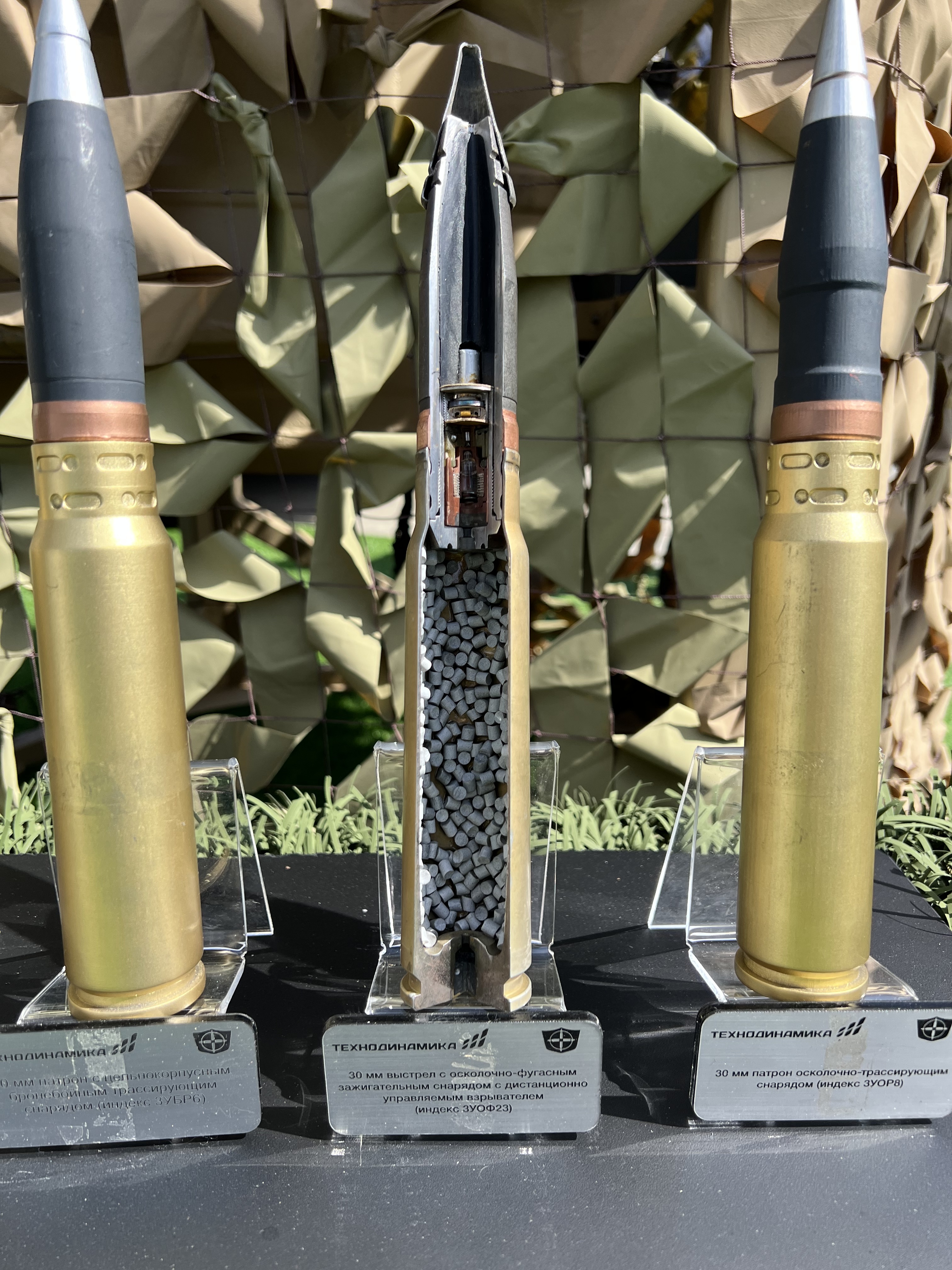
Programmable ammunition for the russian 30mm autocannons

 At ARMY-2022 the russian Technodinamika for the first time presented 30mm 3UOF23 Programmable Airburst round


Thursday, July 21, 2022

UK to send more artillery guns and hundreds of drones to Ukraine

UK to send scores of artillery guns and hundreds of drones to Ukraine

Ben Wallace reveals latest British military support for Ukraine, including plans to send 50,000 artillery shells and hundreds more anti-tank weapons in the coming weeks.


The UK will supply scores of artillery guns, hundreds of drones and hundreds more anti-tank weapons to Ukraine in the coming weeks, the Defence Secretary has revealed.

The delivery of the new equipment will significantly step up the UK’s support as the country fights to repel Russia’s brutal and unjustified invasion.

More than 20 M109 155mm self-propelled guns and 36 L119 105mm artillery guns will soon arrive from the UK, Defence Secretary Ben Wallace announced in an update to Parliament today. Counter-battery radar systems and more than 50,000 rounds of ammunition for Ukraine’s existing Soviet era artillery will also follow, he added.

This equipment will bolster the Armed Forces of Ukraine’s ability to defend itself against Russia’s indiscriminate use of artillery.

The UK will also send more than 1,600 more anti-tank weapons in the coming weeks, along with drones, including hundreds of loitering aerial munitions.

So far 6,900 NLAW, Javelin, Brimstone and other anti-tank weapons, as well as 16,000 artillery rounds, six Stormer vehicles fitted with Starstreak anti-air missile launchers and hundreds of missiles have been sent to Ukraine.

The UK has also supplied maritime Brimstone missiles, multiple launch rocket systems, 120 armoured fighting vehicles and large quantities of non-lethal aid including more than 82,000 helmets, 8,450 sets of body armour and over 5,000 night vision devices.

Defence Secretary Ben Wallace said:

"The scale and range of equipment we are providing demonstrates the strength of our resolve. Together with our international partners, we will ensure Ukraine has the tools to defend their country from Putin’s illegal invasion."

The uplift comes after Prime Minister Boris Johnson announced in June that the UK would provide another £1 billion of military support to Ukraine.

The funding, which brings UK military support and broader regional activity since the outbreak of war to £2.3bn, will herald a new phase in the international community’s support, enabling Ukraine to go beyond their valiant defence against the illegal Russian invasion and mount offensive operations.

The next phase of military support, paid for with this additional funding, will include even more sophisticated air defence systems, uncrewed aerial vehicles and innovative new electronic warfare equipment.

It comes after the UK launched a major training operation for Ukrainian forces, with the potential to train up to 10,000 soldiers.

The Defence Secretary recently visited some of the first Ukrainian soldiers taking part in the programme, which is taking place at sites across the North West, South West and South East of the UK.


Source:
www.gov.uk