Kharkiv Tank Factory unveiled a T-64BVK, the upgraded version of the commanders tank. On the vehicle have installed the surveillance devices, including thermal sight, TV cameras for the situation awareness, the new satellite navigation system, commander's RCWS with a 12.7 mm NSVT machine gun. On the vehicle is also installed the newest communication systems.
The upgraded tank received an additional filter for rough cleaning the fuel system, another surveillance camera for the commander with a detection range of up to 2000 m, enhanced protection of the NSVT machine gun and fuel tanks, rear-view mirrors, front rubber screens and a number of other improvements. At the same time, the plant's employees are carrying out similar work with a batch of T-64BV tanks.
A Type-69 with add on armor to imitate the T-80U MBT, for the ballistic trials in China. In the 1994 the Chinese "123 Engineering General Office" and "The Installation Technology Institute" jointly conducted a ballistic trials against a hypothetical combat target (Type-69 with add on armor) at the south outskirt of Beijing. For the tests they use one of the prototype of the Type-99 with 125mm gun and the new, under development APFSDS.
For the trials the Type-69 was fitted with composite add on armor and the ERA in front of hull and turret.
The front of the tank hull is consist from:
100 mm base steel armor
50 mm steel armor
Two layers of 45 mm fiberglass sheets
50 mm steel armor
The front of the turret is:
200 mm base steel armor
100mm steel armor
80mm thick back plate steel armor
20mm thick middle layer steel armor
100mm and 60mm thick two-layer fiberglass armor.
In order to test the damage caused by the APFSDS the vehicle was equipped with the Type-99 tank's FCS components (sights, ballistic computer) and dogs and guinea pigs were placed in the crew' positions.
Five rounds were fired.
The first shot hit the ERA on the left side of the turret, ERA was destroyed, the main gun barrel was damaged, the turret could not be turned, the drier's optics and the gunner’s sighting was damaged, also damaged the other optical gadgets, and the crew was seriously injured (Dogs and Guinea Pigs), the tank has completely lost its combat capability.
The second shot hit the composite armor on the left side of the turret, which also destroyed the barrel and turret rotation system, the power unit and the sighting device were basically scrapped, and the crew were seriously injured;
The third shot It hits the front of the car body and reacts to the armor. The gun barrel is broken and the turret is tilted. The rotation speed is severely reduced and the gun cannot be adjusted horizontally. The Sights and optics were damaged, and the commander’s internal organs were bleeding;
The fifth shot hit the right front fender, causing the artillery barrel to be scrapped, part of the movement was damaged, the main firepower and maneuverability were completely lost, and the driver and the commander were also seriously damaged.
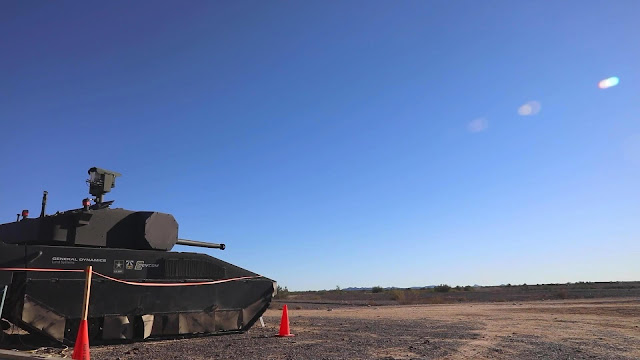
The soldiers of the 82nd Airborne Div. test Expeditionary Modular Autonomous Vehicle (EMAV) (Pratt Miller and QinetiQ's RCV-L) as a practice exercise in preparation for Project Convergence 21 at Yuma Proving Ground, Ariz.
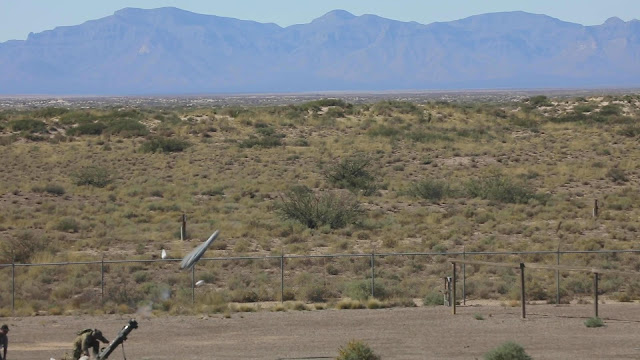
UNITED STATES - 10.07.2021 During Project Convergence 21, the Future Vertical Lift Cross-Functional Team experimented with using Air Launched Effects (ALE) to help Soldiers see the battlefield and extend their reach. Testing with Soldiers in the field allowed the FVL CFT to gain valuable feedback on this emerging capability!
Air Launched Effects (ALE) are a Family of Systems (FoS) consisting of an air vehicle, payload(s), mission system applications, and associated support equipment designed to autonomously or semi-autonomously deliver effects as a single agent or as a member of a team.
ALE is a crucial piece of the Future Armed Reconnaissance Aircraft Ecosystem advanced team concept synergistically enhancing survivability, threat identification, targeting, and lethality of Army aviation brigades and ground force commanders’ assets.
The ALE FoS extends tactical and operational reach and lethality of manned assets, allowing them to remain outside of the range of enemy sensors and weapon systems while delivering kinetic and non-kinetic, lethal and non-lethal mission effects against multiple threats, as well as, providing battle damage assessment data. They will provide scalable effects to detect, locate, disrupt, decoy, and/or deliver lethal effects against threats.
As relatively low cost systems, they are attritable or optionally recoverable. Using a Modular Open Systems Approach provides modularity and rapid integration of new technologies.
PFC Ethan Loudermilk from the 82nd Airborne Division and the civilian personell discusses training with and learning Air-Launched Effects during Project Convergence 21 at Yuma Proving Ground, Arizona.
Project Convergence is the Army's campaign of learning designed to aggressively advance and integrate our Army's contributions, based on a continuous structured series of demonstrations and experiments throughout the year. It ensures that the Army is part of the joint fight and can rapidly and continuously integrate or converge effects across all domains: air, land, sea, space, and cyberspace; to overmatch our adversaries in competition and conflict.
Project Convergence ensures the Army has the right people with the right systems, properly enabled in the right places to support the joint fight.