Saturday, June 27, 2020

Ukrainian R-360 cruise missiles hit the naval target


State tests of the national R-360 “Neptune” missile system are ongoing successfully and effectively in Odesa region. Launches are carried out at the firing range “Alibey” of the Armed Forces of Ukraine. The main feature of the tests of the “Neptune” ground-based cruise missile system this time was the warhead firing. It is a system of ground-based cruise missiles with an anti-ship missile, designed to destroy cruiser, destroyer, frigate, corvette, landing, tank landing and transport ships, which operate both independently and as part of naval task force and landing detachments, as well as radio targets, in simple and complex meteorological conditions at any time of day and year, with active fire and electronic warfare measures of the enemy.

During the last test the newest Ukrainian RK-360MT Neptun coastal missile system made a successful test launch of two R-360 cruise missiles from the designated area in the Odessa region to targets at the Alibey range.


Thursday, June 25, 2020

House Defense Bill Pushes Hypersonic Weapons for Zumwalt Destroyers, Slows LUSV Procurement


Sailors man the rails aboard the guided-missile destroyer USS Zumwalt (DDG-1000) as the ship pulls into Joint Base Pearl Harbor-Hickam on April 2, 2019. US Navy Photo

The House Armed Services Committee may force the Navy to begin integrating hypersonic weapons onto the Zumwalt class of destroyers, something the sea service has talked about but not prioritized in its budget.

The Navy was put in charge of developing a common hypersonic glide body that will ultimately serve as a conventional prompt global strike weapon for the joint force, providing an alternative to nuclear weapons for strategic retaliatory strikes.

The Navy said early in development that it wanted to develop the weapon to the most stringent possible requirement – a weapon that could survive an underwater launch from a submarine – thereby making it easier to integrate the weapon into multiple kinds of launchers.

Earlier this year the service said it would devote money to integrating the weapon onto its Virginia Payload Module, a set of missile tubes added onto the Block V and beyond Virginia-class attack submarines. The Navy requested just over $1 billion in the Fiscal Year 2021 budget request for this effort, which would cover “continued development of the weapon system and flight subsystem, platform integration, and advanced research and development to support future spiral capabilities such as enhanced warhead, advanced communication, alternative navigation, and terminal sensor technology.” The weapon would reach initial operational capability in FY 2028, when it would be ready for use on the Virginia submarines., according to Navy budget documents.

In a section of its FY 2021 National Defense Authorization Act, the HASC strategic forces subcommittee directs the Navy to focus on surface ship integration, too.

A common hypersonic glide body (C-HGB) launches from Pacific Missile Range Facility, Kauai, Hawaii, at approximately 10:30 p.m. local time, March 19, 2020, during a Department of Defense flight experiment. The U.S. Navy and U.S. Army jointly executed the launch of the C-HGB, which flew at hypersonic speed to a designated impact point. Concurrently, the Missile Defense Agency (MDA) monitored and gathered tracking data from the flight experiment that will inform its ongoing development of systems designed to defend against adversary hypersonic weapons. US Navy photo.

“The bill mandates that the department start integration of hypersonics on surface ships, on DDG-1000s, given that the department has been primarily focused on sub-based platforms,” a committee aide told reporters.
“And it asks for a report on certain questions and concerns that are ongoing, including operational control authority, whether we need to update our war plans, who would be responsible for targeting requirements, what the risks of miscalculation would be and what the risk mitigations might be, and finally on basing strategies for a land-based variant. And then it also requires a [Cost Assessment and Program Evaluation] report on costs and testing.”

Specifically, the bill calls for the Navy to start integration efforts on the Zumwalt class no later than Jan. 1, 2021.

Commander of Naval Surface Forces Vice Adm. Rich Brown has expressed interest in putting hypersonic weapons on the Zumwalt class, saying that the ship’s larger size, power generation and missile launcher compared to the Arleigh Burke-class DDG made it a great host for the conventional prompt strike weapon.

“I have got to tell you, I am thoroughly impressed with the capabilities that that destroyer will bring into our fleet. As a matter of fact, I would love to have six more of them, because the capabilities are that good. If you look at conventional prompt strike, I can think of no other better platform than to put conventional prompt strike on that platform. And then once that happens, or if that happens, make no mistake, it will put the fear of god into our adversaries once we marry those two platforms together,” he said during a media call.

The report to Congress that the NDAA language mandates would begin to address some thorny issues related to use of force, risk of escalation, command and control and more.

The submarine community has worked out some of these issues, having a Navy platform using a national strategic weapon – nuclear missiles – in its Ohio-class ballistic missile submarine (SSBN) program. Though it would be the Virginia-class SSNs firing off strategic hypersonic CPGS weapons – and those crews would have to manage having both strategic weapons for national tasking as well as their own weapons for self-defense and strike missions within their Navy fleet chain of command – it’s likely that some of the submarine community’s understanding of command and control, underwater communications, and training for national tasking could be put in place on the attack subs.

However, no surface ships today are equipped with these kinds of strategic weapons and have to deal with these kinds of issues.

The measure still has to survive a full committee vote next month, a full House of Representatives vote and then agreement by the Senate before being signed into law.

Tuesday, June 23, 2020

China launches final satellite in GPS-like Beidou system

BEIJING — China on Tuesday launched the final satellite in its Beidou constellation that emulates and may seek to compete with the U.S. Global Positioning System, marking a further step in the country’s advance as a major space power.


A rocket carrying the last satellite of the Beidou Navigation Satellite System blasts off from the Xichang Satellite Launch Center in southwest China's Sichuan Province on June 23, 2020. (Xue Chen/Xinhua via AP)

The launch of the satellite onboard a Long March-3 rocket was broadcast live from the satellite launch base of Xichang, deep in the mountains of southwestern China, shortly before 10 a.m. About half an hour later, the satellite was deployed in orbit and extended its solar panels to provide its energy.

An initial launch scheduled for last week was scrubbed after checks revealed unspecified technical problems.

The third iteration of the Beidou Navigation Satellite System promises to provide global coverage for timing and navigation, offering an alternative to Russia’s GLONASS and the European Galileo systems, as well as America’s GPS.

The launch of the 55th satellite in the Beidou family shows China’s push to provide global coverage has been “entirely successful,” the system’s chief designer, Yang Changfeng, told state broadcaster CCTV.

“In actual fact, this also signifies that we are moving from being a major nation in the field of space to becoming a true space power,” Yang said.

China’s space program has developed rapidly over the past two decades as the government devotes major resources toward developing independent high-tech capabilities — and even dominating in fields such as 5G data processing.

The first version of Beidou, meaning “Big Dipper,” was decommissioned in 2012. Future plans call for a smarter, more accessible and more integrated system with Beidou at its core, to come online by 2035.

The now complete current system, known as BDS-3, consists of 30 satellites and began providing navigation services in 2018 to countries taking part in China’s sprawling “Belt and Road” infrastructure initiative, along with others, according to the official Xinhua News Agency. It largely relies on medium-Earth orbit satellites, but also operates six geosynchronous orbit satellites such as the one launched Tuesday, Xinhua said.

Along with being a navigation aid, the system offers “short message communication, satellite-based augmentation, international search and rescue, as well as precise point positioning,” Xinhua said. The short messaging systems allows for communications up to 1,200 Chinese characters long, as well as the ability to transmit images, it said.

While China says it seeks cooperation with other satellite navigation systems, Beidou could ultimately compete against GPS and others in the same way Chinese cellphone makers and other producers of technically sophisticated hardware have taken on their foreign rivals.

In 2003, China became just the third country to independently launch a crewed space mission and has since constructed an experimental space station and sent a pair of rovers to the surface of the moon.

Future plans call for a fully functioning permanent space station and a possible crewed flight to the moon, with its first attempt to send an orbiter and rover to Mars possibly coming as early as next month. If successful, it would be the only other country besides the U.S. to land on Earth’s closest planetary neighbor.

The program has suffered some setbacks, including launch failures, and has had limited cooperation with other countries’ space efforts, in part because of U.S. objections to its close connections to the Chinese military.

Size comparison between T-14 Armata and M1A2, Leopard 2, BM Oplot, Type 99, Leclerc and Merkava.

Size comparison between T-14 Armata and M1A2, Leopard 2, BM Oplot, Type 99, Leclerc and Merkava


The First Photos Of The Mars-2000 Reconnaissance Combat Vehicle on the Basis of the BTR-82

The First Photos Of The Mars-2000 Reconnaissance Combat Vehicle on the Basis of the BTR-82


Russia has developed the latest Mars-2000 reconnaissance combat vehicle based on the BTR-82 armored personnel carrier. The vehicle participate on victory day parade in Tula.

The First Photos Of The F-35A Jets Dropping Inert B61-12 Nuclear Bombs During DCA Tests

The F-35 Joint Program Office has released a bunch of images showing DCA (Dual Capable Aircraft) tests involving the release of inert nuclear bombs.

It is not a secret that the F-35A, the CTOL (Convetional Take Off and Landing) variant of the Lightning II aircraft, will be dual capable aircraft (DCA), meaning that it will have the ability to deliver nuclear ordnance as well as conventional weapons. Such dual capability is expected to be included in the Block 4 software release, with initial capability for the B61-12 weapon. Although the F-35A DCA is scheduled to achieve nuclear certification in January, 2023, testing at the 461st FLTS, the test squadron that oversees developmental testing of all variants of the fifth-generation F-35 Lightning II at Edwards Air Force Base, California, has started in 2019.


DCA first safe separation from AF-1 on Jun. 27, 2019.

Images just released by the F-35 Joint Program Office (the Department of Defense’s agency responsible for developing and acquiring the F-35A/B/C) show various drop tests of inert nuclear bombs between 2019 and 2020.

F-35A AF-6 releases inert B61-12 during a dual capable aircraft (DCA) test flight in the skies above Edwards Air Force Base, California, on Nov. 25, 2011.

The photos distributed to the DVIDS distribution service provide additional details about the dates when the tests were carried out: the first separation test with AF-1 flown by Jason Shulze was conducted on Jun. 27, 2019; sixth separation test with AF-1 (pilot unspecified) was carried out on Nov. 7, 2019; first separation test from AF-6 flown by Major Chris ‘Beast’ Taylor was conducted on Nov. 25, 2019. Separation test #6 with AF-1 was carried out with F-35 AF-01 flown by Major Rachael “Banshee” Winiecki on Feb. 6, 2020. A more recent test with AF-6 was carried out on Apr. 2, 2020 (no additional detail can be gathered about this test).

With the integration of the B61-12, the “iconic nuclear fighter role, performed in the past by the F-15E and F-16, is being passed to the F-35A to play a future role in national security.” Other partner nations are slated to transfer the NATO nuclear role to the F-35A in the future.

sixth separation test with AF-1 (pilot unspecified) carried out on Nov. 7, 2019.

eparation test #6 with AF-1 was carried out with F-35 AF-01 flown by Major Rachael “Banshee” Winiecki on Feb. 6, 2020.

This separation test was carried out on Apr. 2, 2020.

Friday, June 19, 2020

Italy might join MGCS, Italian Undersecretary for Defence says

Rome, 16 June 2020 – According to the Italian Undersecretary for Defence Giulio Calvisi, Italy might join the MGS (Main Ground Combat System) programme. “During recent bilateral talks with the German counterpart, the possibility of allowing Italy to participate in the so-called Main Ground Combat System programme, which aims at the development of a new main battle tank, emerged,” Calvisi said, underlining that the Ministry of Defence is committed to identifying further possible solutions should the project being currently underway by the CIO (Consorzio Iveco DV-Oto Melara) would not meet expectations. The CIO received a development contract worth 35 million Euro for the Mid-Life Update of the Ariete MBT, that will bring to the delivery of three prototypes. The Ariete MBT is currently in service with three tank regiments in the Italian Army, these units fielding a total of 123 tanks. According to the 2019 Army Report the current availability of the Ariete MBT is around 40%.


The upgrade will include the adoption of a new 1,500 hp powerpack, replacing the current one which provides only 1,300 hp, which will bring with it the upgrade of the ZF transmission, mobility on soft terrains being increased thanks to the adoption of new tracks, which increased width will allow decreasing the specific ground pressure, a requirement based on lessons learned i.e. in Iraq, where the Ariete was fitted with the heavier add-on kit available at that time (see the opening photo). Both the commander’s and the gunner’s optronics will be replaced by new generation systems, derived from those adopted on the Centauro II armoured car, the former receiving an Attila D (for Digital) panoramic sight while the latter will get a 3rd Gen Tilde B thermal sight. Also safety will be improved thanks to the replacement of hydraulics actuators with electric ones in the turret. The upgrade will also include the adoption of Larimart’s UIS-379 D Digital Intercom system in place of the old analog one and the fitting for an AN/PRC-152 Multiband Handheld Radio with SATCOM capability. Should the prototypes performances meet the MoD requirements, the plan is to upgrade 125 more Ariete MBTs to cover the needs of the three regiments and of the Cavalry School.

Should this fail, and should the option to joint the Franco-German MGCS team prove to be not viable, “alternative options are being evaluated in close synergy with the industrial sector; in particular, research is being carried out on possible strategic partners in order to propose a cooperative European project,” Calvisi answered the Defence Commission on 16 June during the Question Time, following his statement on the protection of the national Defence Industry sector.

The search for partners in the MBT field might well go beyond European borders; in a recent document published by the Italian Army a section was dedicated to the “strengthening of the Italian-Israel cooperation”, and it mentioned specifically a cooperation aimed at improving the performances of the respective national armoured platforms, “extending it to possible future commmon projects, such as that of Main Battle Tanks”. The strengthening of the relationship with the US Army as far as new capabilities developments are concerned has also been recently mentioned.

Although a partnership with European nations, with whom chances of conducting combined operations within the NATO or the European Union frameworks is higher, remains the best option, Italy is looking at 360° for the future of its armoured corps main combat asset.

Wednesday, June 17, 2020

The Bear Hunters

Photos of aircraft that escorted Tu-95RTs and Tu-142 from the Kipelovo AFB during their missions.


1972. F-4J from VF-84 and USS "Franklin D. Roosevelt" (CV-42) in Atlantic. Photo from Tu-95RTs of 392 ODRAP. Archive of Dmitriy Filonenko.

WSO of F-4E of 57th FIS (Keflavik AFB) is taking photo of Tu-142 of 76 OPLAP (Kipelovo AFB)

RAF Phantom FG.1 escorting Tu-95RTs of 392 ODRAP (Kipelovo AFB) over Northen Atlantic, late 1970s. The photo was taken from tail cabin of Tu-95RTs. Phantom's WSO is taking a photo of Tu-95RTs. Archive of Evgeniy Kalinin (392 ODRAP)

USN F-4J '103-AG' of VF-102 escorting Tu-95RTs of 392 ODRAP (Kipelovo AFB) during its reconnaissance flight of USS Independence (CV-62). Circa 1971-72. The photo was taken by Boris Melenevskiy (392 ODRAP).

USN F-4J '103-AA' of VF-11 escorting Tu-95RTs of 392 ODRAP (Kipelovo AFB) during its reconnaissance flight of USS Forrestal (CV-59) over the North Atlantic circa 1974. Credit to Evgeniy Kalinin (392 ODRAP).

USN F-4B '103' of VF-14 escorting Tu-95RTs of 392 ODRAP (Kipelovo AFB) during its reconnaissance flight to USS John F. Kennedy (CV-67) that in cruise of 1973, Atlantic. The names on the cockpit: Pilot LCDR John Allen, RIO LTJG Dax Cnopp. Archive of Evgeniy Kalinin (392 ODRAP)

RAF Phantom FG.1 XV583 'B' of No. 111 Sqd. (AFB Leuchars) escorting Tu-95RTs of 392 ODRAP (Kipelovo AFB) over North Atlantic. 1970s.
The photo was taken by Tu-95RTs crew. Archive of Evgeniy Kalinin (392 ODRAP)

Two USN F-4J of VF-102 escorting Tu-95RTs of 392 ODRAP during its reconnaissance flight of USS Independence (CV-62). Circa 1974-75. The photo was taken by Boris Melenevskiy (392 ODRAP).

Royal Navy Phantom FG.1 'R-011' of 892 NAS escorting Tu-95RTs of 392 ODRAP (Kipelovo AFB) over Atlantic. Circa 1978. Archive of Evgeniy Kalinin (392 ODRAP)

RAF Phantom FG.1 XV583 'B' of No. 111 Sqd. (AFB Leuchars) escorting Tu-95RTs of 392 ODRAP (Kipelovo AFB) over North Atlantic. 1970s. Archive of Evgeniy Kalinin (392 ODRAP).

F-4E of 57th FIS (Keflavik AFB) escorting Tu-95RTs of 392 ODRAP (Kipelovo AFB) over North Atlantic. Circa 1978-85. Archive of Evgeniy Kalinin (392 ODRAP)

F-14A of VF-102 from USS America (CVA-66) over North Sea during Ocean Safari 85. Photo from Tu-95RTs of 392 ODRAP. The fall of 1985

USN F-14A '112' of VF-143 escorting Tu-95RTs of 392 ODRAP (Kipelovo AFB) over Atlantic during USS 'America' (CV-66) cruise 1977-78. Archive of Evgeniy Kalinin (392 ODRAP)

USN F-14A '214/AB' of VF-33 escorting Tu-95RTs of 392 ODRAP (Kipelovo AFB) over Atlantic during USS 'America' (CV-66) cruise (circa 1984). Archive of Evgeniy Kalinin (392 ODRAP)

Two USN F-14A '214/AB' and '210/AB' of VF-33 escorting Tu-95RTs of 392 ODRAP (Kipelovo AFB) over the North Atlantic during USS 'America' (CV-66) cruise circa 1985. Credit to Evgeniy Kalinin (392 ODRAP)

USN Р-3B 'LC-81' (BuNo 152761) of VP-8 escorting Tu-95RTs of 392 ODRAP (Kipelovo AFB) over North Atlantic circa 1979-80. Photo credit to Evgeniy Kalinin (392 ODRAP)

US Navy P-3 and Tu-142M from 76 OPLAP (Kipelovo AFB). Credit to 76 OPLAP archive

F-14A of VF-102. Photo from Tu-95RTs of 392 ODRAP. Late 1980s

F-14A of VF-102 from USS America (CVA-66) over North Sea during Ocean Safari 85. Photo from Tu-95RTs of 392 ODRAP. The fall of 1985

24 July 1978. Interception of Tu-142 76 OPLAP (Kipelovo AFB) of crew of Alexander Tsvetkov by the RNoAF F-104G of 331 squadron (Bodo AFB). Archieve of Victor Kibalnik

USS 'America' (CV-66) in Atlantic near Puerto Rico on February 10, 1986. The photo was taken by Tu-95RTs crew of 392 ODRAP. Archive of Evgeniy Kalinin (392 ODRAP)

USN Р-3C 'LN-40' (BuNo 156510) of VP-45 escorting Tu-95RTs of 392 ODRAP (Kipelovo AFB) over Northern Atlantic circa 1977. Photo credit to Evgeniy Kalinin (392 ODRAP)


Monday, June 15, 2020

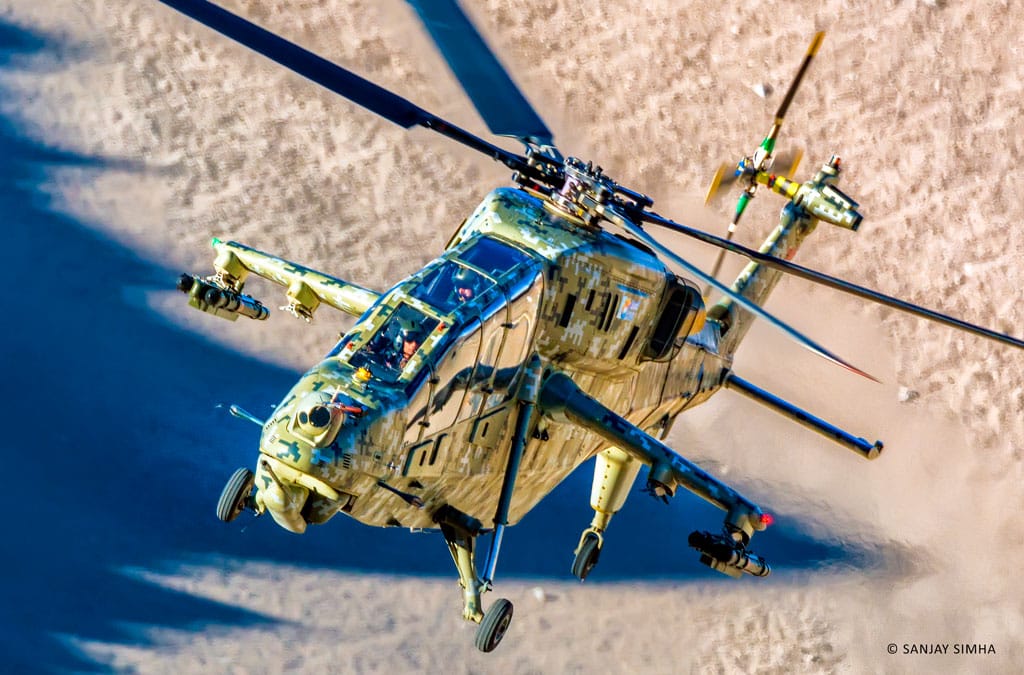
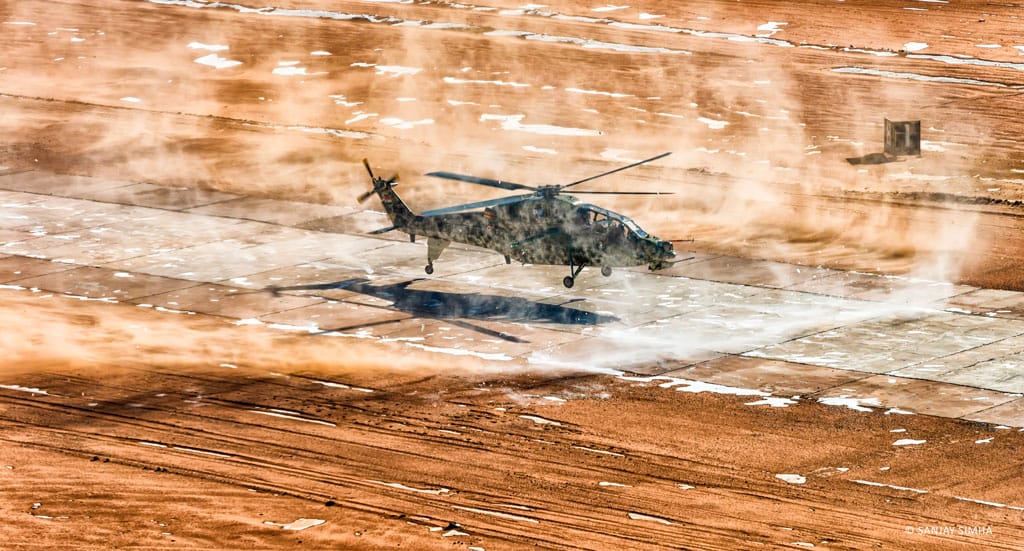
1st Contract Finally In Sight For India’s Own Attack Helicopter

Freshly confident that an elusive contract for India’s first attack helicopter is in sight, India’s Hindustan Aeronautics Ltd (HAL) has ramped up production of the Light Combat Helicopter (LCH) in Bengaluru. With crucial — and sticky — price negotiations complete, HAL is finally reassured that this one’s in the bag.


If HAL is right, and the contract is closed this year, it will be a full four years after the Indian MoD cleared the acquisition in November 2016, a long time for a program that’s been waiting for years, but fleeting by traditional Indian contracting standards.

Speaking in an exclusive interview to Livefist, HAL chairman R. Madhavan said, “That (the order) will come very soon. We have concluded price negotiations. We are now awaiting financial sanction. By the end of this year, we should see the initial order for 15 aircraft. After that we expect orders for more than 150. In fact, assuming we’re receiving the order, we’ve already begun production of five new aircraft immediately. This will allow us to deliver the aircraft earlier than planned, once the order is confirmed.”

While the Indian Air Force will be the LCH’s launch customer, the Indian Army will receive most of the 165 planned airframes. The two services still haven’t fully sorted out who must operate armed helicopters, with even foreign imports of the AH-64E being split between the two services for now.

The first LCH order has been tantalisingly close but just out of reach for a few years now, though it must be said that HAL is now for the first time convinced that contract signature will take place before the year is out. It has been a tense wait.

Speaking to Livefist last February, HAL’s chief helicopter test pilot Wing Commander Unni Pillai said, “We are awaiting contract signature. The delivery of the first 15 can happen almost immediately. We’ve already made structures for 9 inhouse using HAL money. They only need to be equipped. Will take 6 months to deliver and we can do it before the stipulated time in contract. Will be the first time a delivery is happening well in advance to the users. We expect a total order for 165 airframes. Looking at foreign market very closely too. Very few countries make a cost-effective attack helicopter — few countries can afford the capability. Will compete with China too.”


Unlike virtually every other attack helicopter in the market, the LCH’s biggest designed-in capability is high altitude performance, a key requirement from the aircraft. Prototypes of the helicopter have been deployed repeatedly over the last decade in the super-high altitude areas of Ladakh and the Siachen Glacier.

LCH project pilot Group Captain Hari Nair tells Livefist, “This has to be seen against the backdrop of the Kargil War, it was back then when we had attack helicopters which could not  reach the altitudes because of performance limitations. That is when the Air Force wanted a weapon system with the capabilities of reaching those altitudes and that was the backdrop to the requirements that were framed for this helicopter.  That’s the origin, and we developed using the transmission of the ALH. They have much more than this, they have got improved aerodynamics. There was a challenge in intergrating the wings on the helicopter and retaining the overall performance and essentially the focus was on high altitude. High altitudes in the sense that, much more than what the western helicopters are capable of. Altitudes in the axis of 15000-17000  feet, operating and firing weapons.  So the entire focus was to develop an attack helicopter to operate in those higher altitudes.” 


Group Captain Nair adds, “As a pilot when you fly in that terrain, I am used to flying in certain other helicopters which are still in service with the Indian Air Force. The performance of the LCH gives tremendous freedom of operations. Freedom in the sense of the flight envelop, handling, characteristics, it is very forgiving. It has got a very high transit speed compared to the other helicopters in service today.”

LCH firing an MBDA Mistral missile

At the testing level, weapons trials have been successful, though bureaucratic hurdles have left the LCH (and the Dhruv-based Rudra) incompletely armed. Last year Livefist detailed the inexplicable path that has left the LCH ironically armed with launchers, but without weapons to fire from them. Armed with a chin-mounted 20mm Nexter M621 cannon and 70mm rocket pods, the LCH has ATAM (air to air Mistral) launchers, and will deploy the Dhruvastra twin launcher for the indigenous HELINA anti-tank guided missile. An ongoing effort has also sought to arm the LCH with a foreign-made anti-tank missile, either the Rafael Spike ER or MBDA PARS L3, though that hasn’t resulted in a decision or next steps.

Manufacturing and fabrication work has ramped up at HAL’s facility in Bengaluru. In February this year, right before the Covid19 pandemic hit, HAL inaugurated the LCH final assembly hangar.


Friday, June 12, 2020

Cemetery of Abrams tanks

Cemetery of Abrams M1A1M tanks of Iraqi Army
Iraq, Camp Taji, June 2020